
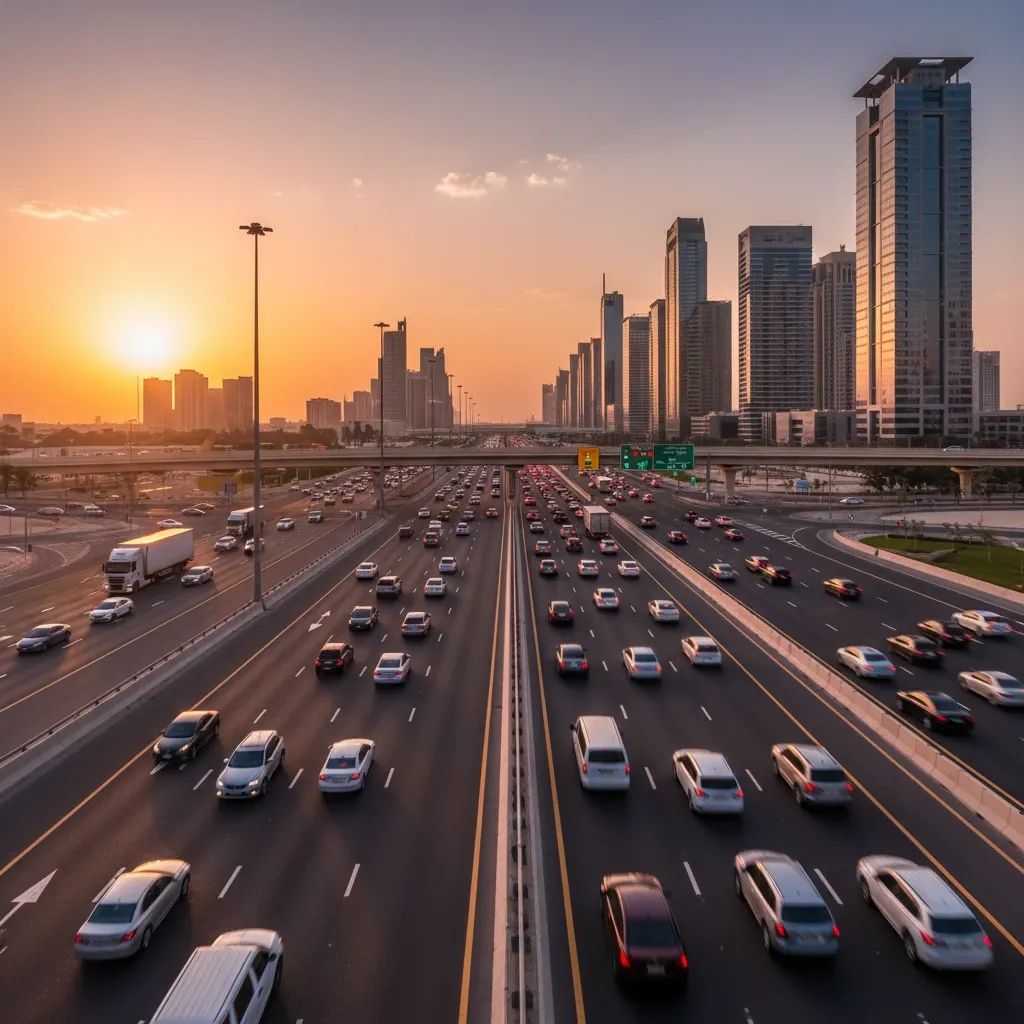
Truck collisions and delivery delays cost Dubai's economy millions annually while straining emergency services. This year, however, the emirate's transport authorities engineered a notable improvement: a 20% decline in truck-related traffic incidents during 2025, achieved through a combination of time-based road closures and infrastructure investments. The reduction signals that managing a high-volume logistics economy with robust safety measures is achievable.
Why This Matters
• Safety improvements: Fewer heavy-vehicle collisions translate to reduced multi-vehicle pileups and improved traffic flow during peak hours, benefiting millions of daily commuters in Dubai.
• Commute reliability: Reduced truck incidents mean fewer road closures and improved emergency response times, creating more predictable commute patterns for residents.
• Economic continuity: The logistics sector, already a cornerstone of Dubai's competitiveness, now operates under enhanced safety frameworks without sacrificing supply-chain efficiency.
The Core Approach
The United Arab Emirates Dubai Roads and Transport Authority (RTA) deployed a coordinated strategy beginning in early 2025.
Timing restrictions formed the first pillar. Effective January 1, 2025, trucks were barred from Emirates Road between Al Awir Street and Sharjah from 5:30 PM to 8:00 PM each evening—precisely when commuters and delivery vehicles compete for road space. This expansion built on existing restrictions already enforced on key arterials, where trucks face time-based movement limitations during peak hours. These measures encourage operators to adjust schedules strategically rather than compete for space during congested periods.
Infrastructure investments represent the second component. The RTA has prioritized developing dedicated logistics corridors and improving highway capacity to accommodate freight movement during permitted hours, reducing pressure on alternative routes and improving overall network efficiency.
The third element combines regulatory oversight with operational compliance. Enhanced vehicle standards and registration requirements ensure that trucks operating in Dubai meet safety specifications. The RTA collaborates with Dubai Police and municipal authorities to enforce these standards consistently across major corridors.
Field Operations and Enforcement
Throughout 2025, the RTA intensified field inspections at key checkpoints and corridors. Enforcement teams monitor vehicle conditions, compliance with time restrictions, and adherence to designated routes. The focus on consistent, visible enforcement has encouraged operator compliance with the new framework.
Data from major corridors shows measurable improvements: restrictions appear to be functioning as intended, with operators adjusting their schedules to work within the permitted movement windows rather than attempting to circumvent regulations.
Dubai's Broader Logistics Strategy
These 2025 initiatives align with Dubai's Commercial and Logistics Land Transport Strategy 2030, which targets sustainable growth in the logistics sector while maintaining quality of life for residents. The RTA's investment in infrastructure and operational frameworks reflects recognition that managing heavy vehicle movement requires continuous refinement of regulations, enforcement mechanisms, and physical capacity.
The strategy explicitly acknowledges that logistics and urban livability are interdependent—efficient freight movement requires structured oversight, and resident safety depends on limiting conflicts between heavy vehicles and general traffic.
Regulatory Context Across the UAE
Dubai's initiatives exist within a broader UAE-wide regulatory environment focused on road safety and logistics management. Other emirates have implemented comparable frameworks emphasizing:
• Time-based restrictions on heavy vehicle movement during peak commuting hours
• Enhanced vehicle inspection and maintenance standards
• Digital registration and permit systems for commercial operators
• Collaboration between transport authorities, police, and municipal agencies
These coordinated regional efforts reflect a unified approach: managing high-volume logistics networks in densely populated urban areas requires structured, consistent regulatory frameworks.
Economic and Practical Implications for Residents
For commuters, the 20% reduction in truck incidents translates directly to smoother traffic and fewer unexpected disruptions. Fewer heavy-vehicle collisions mean fewer road closures, fewer detours, and reduced secondary congestion.
For delivery drivers and operators, the regulatory shift creates both challenges and benefits. Truck movement restrictions require route adjustments and tighter scheduling, increasing logistical complexity. However, the framework also creates predictability—operators can plan around known restrictions rather than compete unpredictably for road space.
For businesses relying on logistics services, the structured environment provides benefits. Predictable delivery windows, reduced congestion, and improved traffic flow support supply-chain reliability. The enhanced regulatory framework protects legitimate operators by reducing unfair competition from non-compliant actors.
Infrastructure Development
The RTA's ongoing investment in Dubai's transportation infrastructure—including new roads, improved intersections, and corridor expansions—works in tandem with truck movement restrictions. Increased capacity during permitted hours helps accommodate freight movement efficiently, reducing pressure to override time restrictions and supporting the overall safety framework.
Looking Forward
The 20% truck-incident reduction establishes a baseline for ongoing improvement. The RTA continues to refine its approach, balancing logistics efficiency with resident safety. Future enhancements will likely include:
• Further optimization of truck movement restrictions based on 2025 operational data
• Continued investment in logistics infrastructure
• Enhanced coordination with other emirates on regional truck movement standards
• Ongoing collaboration between the RTA, Dubai Police, and municipal authorities
For residents, the modest but measurable reduction in truck-related incidents represents the practical outcome of structured regulatory enforcement and infrastructure planning—systems working reliably in the background to prevent disruptions and maintain the balance between economic activity and quality of life. As Dubai continues to grow as a logistics hub, this commitment to managing heavy vehicle movement through consistent, technology-enabled oversight will remain central to urban planning and public safety strategy.


