
Dubai's Air Bridge to Syria's Second City: What Matters Now
The flydubai network now reaches Aleppo directly. From July 20, daily flights connect Dubai International to northern Syria's largest city for the first time in 14 years—a shift that opens opportunity for traders, reconnects families, and signals the UAE's serious reengagement with Syria's economic recovery.
Why This Matters
• Same-day round trips possible: The flight schedule allows passengers to depart Dubai in the morning, land in Aleppo within approximately 90 minutes, complete business, and return the same evening—no overnight stays required for site inspections or family visits.
• Direct supply access restored: Aleppo's textile, ceramic, and food sectors are now reachable without Beirut intermediaries; Dubai traders can coordinate shipments directly with northern Syria's production centers.
• Family economics: Return fares reportedly starting around AED 1,800 make quarterly visits feasible for middle-income wage earners; the Syrian diaspora across the UAE gains practical access to aging relatives without costly multi-leg routing.
• Investment corridor: With growing UAE-Syria trade relations, professionals in construction, logistics, and project management have emerging employment prospects.
The Strategic Timing
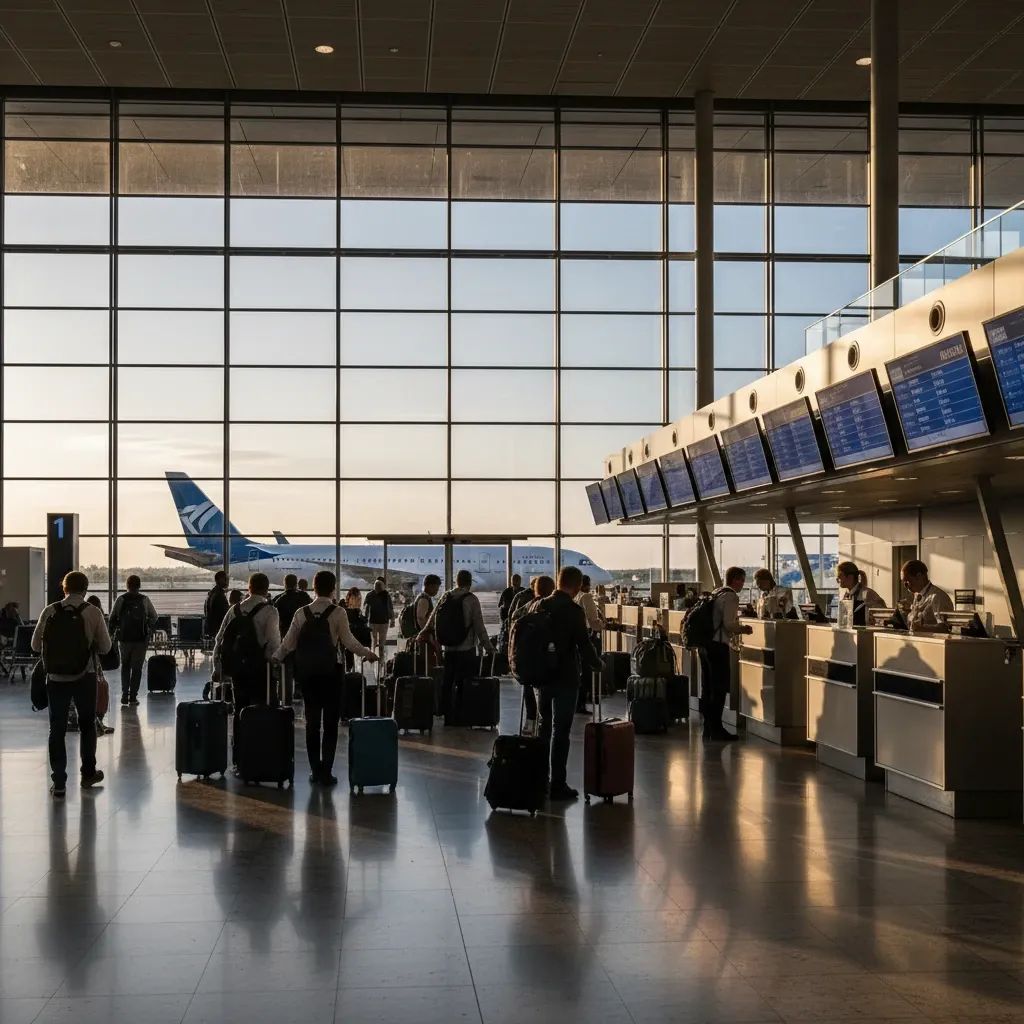
This launch arrives at a specific moment. Aleppo International Airport emerged from a brief January shutdown and officially reopened its air corridor to Turkey in early March 2026. The refurbished single terminal now accommodates Turkish Airlines, Royal Jordanian, Air Arabia, and regional operators alongside flydubai.
According to regional aviation data, the airport has demonstrated strong passenger recovery following its reopening. When an airport's capacity constraints become real, that signals confidence from multiple carriers. The current facility was engineered for significant capacity, and current trajectory suggests growing utilization. Infrastructure expansion plans are underway to accommodate future demand, with pathways to develop new terminal capacity—but that project moves slowly. First-mover carriers like flydubai are staking position ahead of the crowd.
Parallel indicators show regional air traffic over Syria has increased substantially year-on-year in 2026. That statistic validates why airlines are returning. When airspace recovers and security stabilizes, scheduled flights follow.
What This Means for Residents and Workers
For Syrian nationals working across the UAE and Gulf states, the practical advantages are significant. Previous journeys required overnight stops in Beirut or Amman, extending a two-hour flight into an eight-hour endurance test. The new direct routing allows professionals to visit aging parents, attend weddings, or handle urgent family affairs without extended travel time. Same-day return scheduling supports work continuity with minimal disruption.
For business travelers from the UAE, the efficiency gain is concrete. Construction firms evaluating warehouse sites in Aleppo's industrial zone no longer require multi-day absences. An engineer, project manager, and procurement officer can now travel, inspect facilities, negotiate with local contractors, and return the same day. Previously, this required significant additional expense in fares and accommodation. Emirates codeshare arrangements smooth onward connections for travelers arriving from Europe or Asia, enhancing Dubai's role as a transit point.
Import-export operators sourcing Aleppo's traditional products—textiles, ceramics, dried goods, and light manufacturing—gain direct supply-chain coordination. A Dubai-based trader no longer depends on Beirut intermediaries to negotiate volumes or inspect batches before shipment. Regular site visits become operationally viable.
Investors evaluating reconstruction projects across northern Syria encounter fewer barriers. A company assessing opportunities in agriculture, hospitality, or infrastructure can execute proper due diligence without committing executives to international travel via third countries. Site familiarity translates to better decision-making and faster project evaluation cycles.
Airport Capacity and Market Position
Aleppo International's current capacity serves the region's immediate needs. The refurbished terminal handles passenger volumes efficiently. As traffic grows, expansion plans address future demand, though new infrastructure requires time to develop.
Carriers entering now benefit from straightforward operational conditions. As capacity expands and becomes more competitive, slot allocation typically favors early entrants. flydubai's position in 2026 establishes an early-mover advantage in a recovering market.
Flydubai's Regional Expansion
The Aleppo launch represents one of several new routes for the UAE-based carrier in 2026. Bangkok launched earlier in the summer. Benghazi, Libya, followed. Pokhara, Nepal, opens September 23. The pattern reflects the carrier's strategy: serve underserved or recovering markets where demand exists among diaspora communities, traders, and investors.
The strategy carries calculated risk. flydubai operates a unified Boeing 737 fleet, eliminating training and maintenance complexity. At mid-2026, the airline maintained strong operational performance with Middle Eastern demand showing healthy growth—flydubai's core region. Additional Middle East capacity is being absorbed by market demand.
The Broader UAE-Syria Realignment
This flight route reflects larger regional reorientation. Following recent political transitions and official diplomatic engagement, the UAE has shifted toward active economic participation in Syria's recovery and development.
Emirati companies now pursue opportunities in tourism, aviation infrastructure, agricultural technology, and construction. Business partnerships and investment frameworks have been formalized to support legitimate economic engagement. This represents deliberate institutional positioning.
For residents with professional expertise—architects, structural engineers, project managers, procurement specialists, logistics coordinators—this reengagement creates employment opportunities in sectors previously constrained. Companies registered in Dubai are pursuing projects in Syria at scale. Professional networks and experience navigating Syrian supply chains are increasingly valuable.
The Aleppo flight accelerates this dynamic by reducing friction. When site visits become day-trip feasible, project scoping accelerates. When due diligence is efficient, investment decisions happen faster.
Restoring Regional Connectivity
For many residents, this flight restores direct connection to northern Syria's population centers. A decade of disrupted travel patterns now eases through practical, regular air service.
The practical metrics matter—cost, time, frequency—but the restoration of regular air connectivity carries significance. An airline restoring a route signals market confidence and regional normalization.
For the business community, Aleppo's integration into the UAE's aviation network marks a transition point: northern Syria has moved from uncertain status to operational reality. The traders, engineers, and investors boarding FZ 1191 are building futures as the region stabilizes and develops.


