
A Rare Maritime Crisis: What the Atlantic Hantavirus Outbreak Means for Gulf Travelers
The World Health Organization has shifted its focus from monitoring to active crisis management as a dangerous hantavirus cluster aboard a polar expedition vessel claims lives across multiple continents. Three passengers have died, and the medical complexities of managing an infectious disease outbreak in international waters—where jurisdictional authority remains murky and evacuation logistics create cascading delays—now serve as a cautionary blueprint for the thousands of affluent residents from the United Arab Emirates who book similar remote voyages annually.
This is not simply another cruise ship illness. Unlike typical maritime medical emergencies, hantavirus represents a convergence of environmental hazard, maritime vulnerability, and regulatory gaps that directly affects the expedition tourism industry serving wealthy Gulf clients.
Why This Matters
• Three confirmed deaths from a rare rodent-borne pathogen on a specialist cruise ship operating in Atlantic waters as of early May 2026
• One laboratory-confirmed case and five suspected infections among approximately 220 passengers and crew aboard the MV Hondius
• International evacuation complications: Port state restrictions in Cape Verde delayed medical care, exposing gaps in maritime health governance that UAE travelers should understand before booking remote voyages
The Vessel and the Voyage
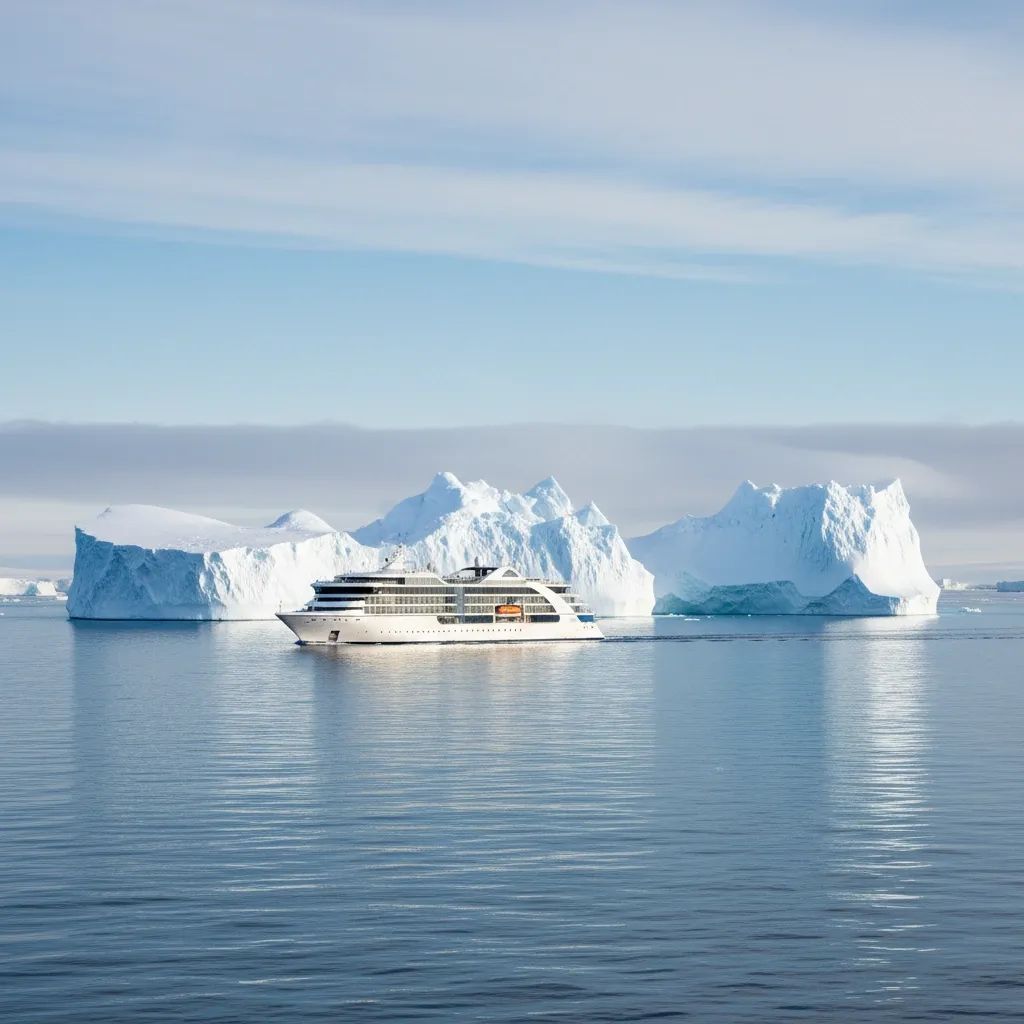
The MV Hondius, a Dutch-flagged polar cruise ship operated by Oceanwide Expeditions, departed from Ushuaia in Argentina approximately three weeks before outbreak symptoms emerged on the vessel. This specialist vessel is designed to accommodate both passengers and crew for expedition tourism to remote regions like Antarctica and the Falkland Islands, where smaller vessel sizes enable access to narrow passages and pristine landing sites that larger ships cannot reach.
The itinerary itself tells part of the story. Polar expeditions attract wealthy travelers willing to invest significant sums for exclusive access to extreme environments. UAE residents represent a significant market for luxury expedition cruises, with travel agencies in Dubai and Abu Dhabi actively marketing Antarctic voyages to Gulf residents seeking remote experiences. The MV Hondius exemplifies this market: a specialized vessel designed for precisely this demographic.
By early May 2026, the ship was navigating toward Cape Verde after weeks of exposure to Antarctica's wildlife, the Falkland Islands' fauna, and Saint Helena's isolated population centers—each locale presenting potential environmental contamination pathways that investigations are now actively tracing.
How the Outbreak Unfolded
The initial case involved a 70-year-old Dutch passenger who developed symptoms consistent with hantavirus during the voyage. His condition deteriorated rapidly, and he died aboard the ship before arrival at Saint Helena, where his body was removed for local disposition. His 69-year-old wife, also aboard, subsequently fell severely ill. She was evacuated in South Africa but died in a Johannesburg hospital while attempting to arrange medical transport back to the Netherlands.
A third fatality, whose personal details remain undisclosed by health authorities, was still aboard the vessel when it docked in Praia, Cape Verde's capital, on May 3, 2026. Among the surviving symptomatic patients, a 69-year-old British national tested positive for hantavirus through laboratory confirmation and required intensive care admission. Two additional passengers developed acute symptoms necessitating urgent evacuation, while two crew members also required emergency medical intervention.
The WHO's epidemiological classification reflects the diagnostic uncertainty typical in maritime outbreaks: one laboratory-confirmed case and five suspected infections pending full verification through sequencing and additional testing. This distinction matters legally and medically—suspected cases receive presumptive treatment while confirmed cases trigger mandatory reporting and investigation protocols.
Why Cape Verde Became a Flashpoint
When the MV Hondius arrived at Praia seeking to offload ill passengers for medical care, port state authorities exercised restrictions on disembarkation, citing infectious disease concerns. This bureaucratic complication—rooted in legitimate health authority responsibilities—occurred without established coordination mechanisms, creating a medical and legal crisis for passengers already in critical condition.
The jurisdiction question exposed a fundamental weakness in maritime governance. The vessel operates under Dutch flag state authority, yet Cape Verde exercised port state control over entry and disembarkation. Affected passengers held passports from multiple nations (Dutch, British, and others), meaning no single embassy could unilaterally resolve evacuation logistics. Meanwhile, the disease progression could not wait for administrative clearance.
The WHO ultimately brokered coordination between South Africa, Cape Verde, the Netherlands, and the United Kingdom to permit evacuations and establish care protocols. This diplomatic effort—necessary and effective—nonetheless revealed how maritime health emergencies can become entangled in territorial sovereignty considerations, potentially delaying critical intervention.
For UAE residents considering expedition cruises, this scenario illustrates a hidden risk: your nationality, the vessel's flag state, the port authority, and geopolitical relations all influence whether you can access emergency medical care when illness strikes. Standard travel insurance often excludes maritime infectious disease outbreaks, leaving passengers with substantial financial and legal exposure.
Understanding the Contamination
Hantavirus transmission operates through a specific environmental mechanism: contact with infected rodent excretions—urine, feces, or saliva—typically aerosolized when contaminated materials are disturbed. In enclosed spaces like cruise ship cabins, ventilation systems, and shared galleys, such particles travel efficiently between compartments and accumulate in poorly ventilated zones.
Investigations are examining two primary hypotheses: contamination originating within the ship itself through rodent infestation (perhaps acquired during extended time in port facilities or through provisioning), or exposure during land-based excursions where passengers encountered infected rodent populations in remote habitats.
The incubation timeline complicates epidemiological detective work. Hantavirus typically produces symptoms between one and eight weeks post-exposure, meaning the first patient's exposure could have occurred anywhere during the voyage or even prior to departure. The MV Hondius visited Antarctica, remote South Atlantic islands, and South American ports—each a potential exposure site. Investigators are now conducting environmental sampling and testing crew and passenger interviews to establish exposure chronology.
The WHO is conducting viral sequencing analysis to identify the precise hantavirus strain involved. This detail carries epidemiological significance: most North American and European hantavirus strains rarely transmit between humans. However, the Andes hantavirus endemic to South America has demonstrated documented person-to-person spread in previous outbreaks. Given the vessel's departure from Argentina, epidemiologists are actively investigating whether this more transmissible variant is involved—a possibility that would fundamentally alter outbreak management protocols and risk assessments.
Why Person-to-Person Transmission Matters Here
Standard hantavirus strains pose minimal person-to-person transmission risk, making outbreak containment straightforward in most terrestrial settings. However, a cruise ship's confined environment—with shared air circulation, close quarters, communal dining, and limited isolation capacity—theoretically amplifies transmission probability if a more contagious strain is involved.
The current cluster of six symptomatic individuals, concentrated aboard a single vessel over a compressed timeframe, may reflect either a single environmental contamination event (everyone exposed to the same rodent-contaminated surface or shared ventilation intake) or multiple independent exposures. If person-to-person spread is occurring, outbreak trajectory becomes exponentially more severe and unpredictable.
This distinction will determine whether future outbreak investigations treat similar vessels as routine maritime health incidents or as potential pandemic vectors requiring extraordinary isolation measures.
Implications for UAE Travelers and the Expedition Industry
Residents of the United Arab Emirates who regularly book polar expeditions through Dubai-based travel agencies should now demand specific information before committing deposits:
Does the operator maintain documented rodent-control certifications from recognized maritime authorities? When was the vessel's last comprehensive environmental health inspection? What pest-monitoring protocols are active during voyages? Does the operator provide transparent documentation of any previous infectious disease incidents?
Travelers should also scrutinize travel insurance fine print. Standard cruise coverage often explicitly excludes infectious disease outbreaks, leaving passengers who cancel due to health concerns with financial losses. Premium policies offering epidemic exclusion waivers exist but command higher premiums and require advance purchase.
The incident raises questions about the industry's safety standards and operator accountability. Enhanced scrutiny of vessel certifications, rodent-control protocols, and pre-voyage health assessments will likely become standard practice across the expedition cruise sector, potentially increasing operational costs that may be reflected in future voyage pricing.
Expedition cruise operators may respond by implementing enhanced pre-departure health screenings, stricter rodent-control protocols, and expanded onboard isolation capacity. These measures will increase operational costs, potentially affecting voyage pricing structures in the coming seasons.
The Medical Response and Current Status
The WHO is coordinating laboratory analysis, epidemiological investigation, and viral sequencing across multiple member states. Medical care and support continue for affected passengers and crew through partnerships with South African healthcare authorities and other national health services. The organization has not issued travel restrictions but maintains active surveillance as investigation results emerge.
Hantavirus treatment relies entirely on supportive care—there is no specific antiviral cure. Once respiratory syndrome develops, patients require intensive monitoring, oxygen support, and hemodynamic management. Case fatality rates for hantavirus pulmonary syndrome exceed 30% in certain populations, explaining the three deaths among six affected individuals aboard the MV Hondius.
Prevention focuses on environmental hygiene and rodent-control measures, since no vaccine exists. For travelers, this means verifying that operators maintain rigorous pest-management protocols and environmental sanitation standards.
Looking Forward: Industry and Regulatory Implications
This outbreak will likely catalyze renewed regulatory scrutiny of maritime health standards, particularly for specialized vessels operating in remote regions. Port health authorities may increasingly demand routine rodent-control certifications, environmental audits, and ballast water testing before permitting vessel entry to their jurisdictions.
The specialized polar expedition sector—already operating at premium price points targeting affluent international clientele—faces pressure to demonstrate that adventure tourism does not necessitate health compromise. For the operators serving UAE residents, heightened transparency about safety protocols will become a competitive necessity, not a marketing afterthought.
Passengers boarding similar vessels should approach bookings with informed scrutiny. Request written documentation of operator safety practices. Verify that travel insurance explicitly covers infectious disease scenarios. Register your voyage details with UAE embassy representatives, particularly for remote itineraries where emergency medical infrastructure is limited. Understand that expedition cruising, while typically safe, carries inherent environmental risks that require passenger awareness and corporate accountability.


