
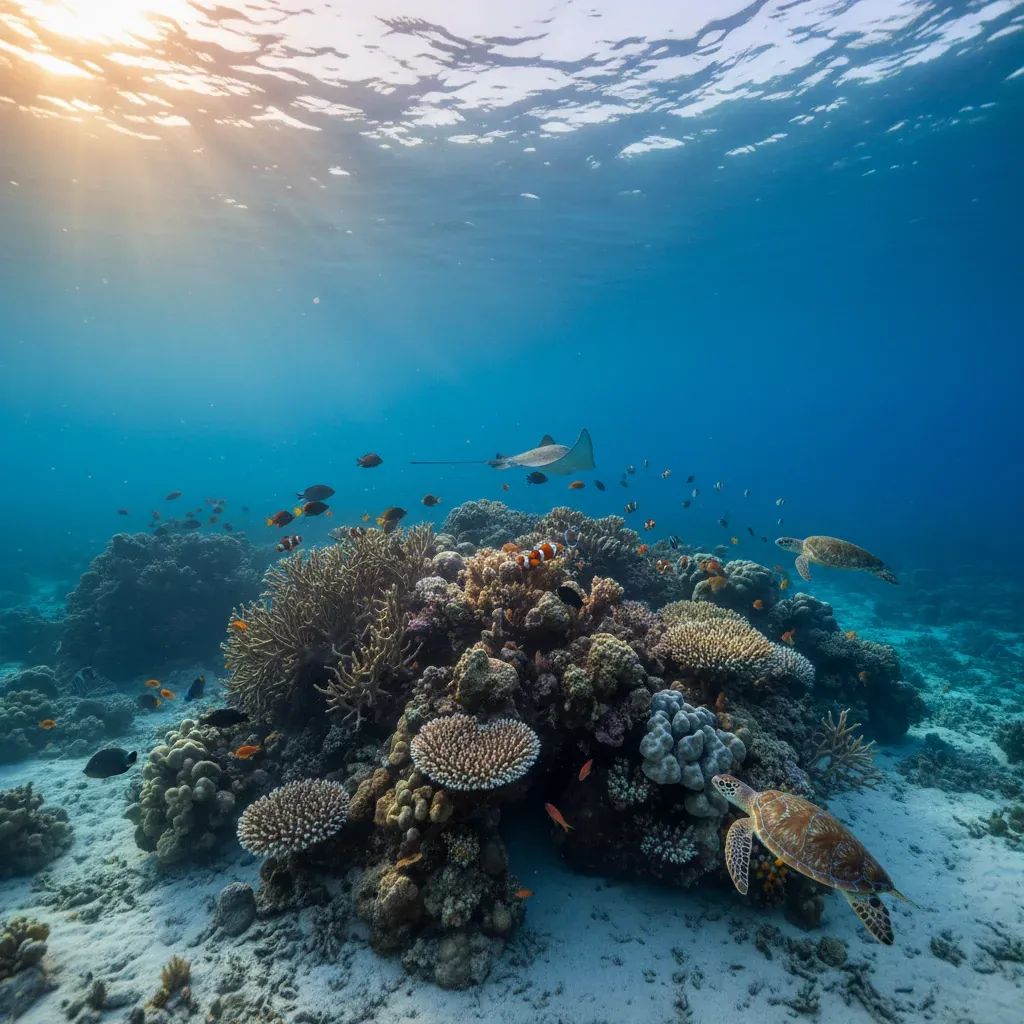
The United Arab Emirates sits atop a marine environment where small fish inhabiting Arabian Gulf coral reef systems face a significant biological challenge. These fish have evolved to withstand temperatures that would stress ecosystems elsewhere, yet they experience repeated cycles of oxygen fluctuation during the summer season—a pattern researchers are investigating for potential long-term impacts on reef health and food security.
What Researchers Are Investigating
The research team at NYU Abu Dhabi's Marine Biology Lab focused on an overlooked aspect of reef stress: the nightly oxygen cycle. Key findings include:
• Oxygen fluctuations occur regularly: Low-oxygen conditions now affect more than 50% of summer days in Gulf waters, creating repeated stress cycles rather than isolated events.
• Fish expend significant energy recovering: When oxygen levels drop at night, fish reduce activity and metabolism. When sunlight returns and oxygen rebounds hours later, their bodies shift into overdrive to repair cellular damage and replenish depleted energy reserves—a cycle that repeats before recovery is complete.
• Seasonal patterns are intensifying: Historical monitoring data shows that the seasonal hypoxic zone has expanded and persists longer than in past decades, a trend scientists attribute to both natural respiration cycles and human-related factors including nutrient discharge.
How the Research Was Conducted
Daniel Ripley, leading the research team as a Postdoctoral Associate at NYU Abu Dhabi, examined the nightly suffocation cycle through laboratory experiments. The research team recreated oxygen fluctuation conditions in controlled tanks at NYU Abu Dhabi, measuring muscle activity, oxygen consumption rates, and molecular markers of cellular stress in real time. Fish did not adapt to the cycle—they merely survived it, operating perpetually below their physiological ceiling.
The metabolic measurements reveal that fish surviving hypoxia expend substantial energy just recovering from it. A fish that dedicates 40% of its daily calorie budget to crisis recovery has fewer resources available for reproduction, growth, and disease resistance—potential impacts researchers are investigating.
The Arabian Gulf's Unique Environmental Challenge
The Arabian Gulf's coral reef environment presents extreme conditions. Summer surface waters experience significant temperature variation, and water circulation is restricted by geography. Most critically, the mechanisms that restore oxygen in tropical and temperate reefs function less efficiently here.
Historical monitoring data from UAE reef stations documents that the seasonal near-bottom hypoxic zone has not merely expanded—it has intensified, occupying larger seabed areas and persisting several months longer annually compared to 1980s baselines. Scientists attribute this to multiple factors: natural overnight oxygen consumption by bacteria and algae in stationary waters, agricultural runoff, industrial nutrient discharge, and shifting regional wind patterns.
Reef Fish Under Pressure
Small reef fish occupy a vulnerable position in this environment. When hypoxic zones expand vertically, certain species face a biological squeeze. Moving deeper exposes them to toxic water. Crowding into shallower zones increases vulnerability to larger predators and fishing pressure. Many species lack the flexibility to relocate easily.
These fish perform foundational ecological functions. They graze algae that would otherwise damage coral tissues. They serve as the primary food source for larger species. They maintain nutrient cycling within the reef structure itself. Weakening of these populations could cascade through reef ecosystems over time.
Implications for UAE Residents
For the United Arab Emirates, this research matters because reef fish play important roles in both marine ecosystems and food security. Commercial species like hammour depend on healthy juvenile populations in reef nursery zones. If oxygen stress during critical growth periods weakens these juvenile cohorts, it could eventually affect adult populations and fishing communities that depend on reef-based fisheries.
However, it is important to note that the current research documents the biological stress mechanisms—not yet widespread population declines. Researchers and policymakers are investigating whether these stress patterns will translate into significant economic impacts and what management strategies could help.
What Comes Next
The immediate challenge for UAE policymakers and marine managers involves understanding whether current management practices can address multiple stressors simultaneously. Potential areas of focus include:
• Monitoring oxygen levels continuously in reef areas
• Managing nutrient pollution from agricultural and industrial sources
• Preserving water circulation patterns through coastal planning
• Tracking fish population changes in real time
The research emerging from NYU Abu Dhabi's Marine Biology Lab provides biological evidence for why these investments matter. The metabolic measurements clarify the mechanisms of reef stress in the Gulf. Whether policy adaptation matches the pace of ecological change remains an open question that will unfold over coming years.
For UAE residents and policymakers, the key takeaway is that the Arabian Gulf's coral reefs face genuine challenges requiring sustained attention—not an immediate crisis, but a developing situation worthy of ongoing research, monitoring, and proactive management.


