
Unraveling the Blame Game: Sudan's Diplomatic Theater and What It Means for the Gulf
Sudan's civil war has now created a secondary conflict: one fought with accusations, leaked documents, and pointed fingers at the United Nations. On February 26, 2026, the United Arab Emirates stepped into the Geneva spotlight to publicly reject allegations that it has armed one side of Sudan's devastating three-year conflict. But beneath the diplomatic volleys lies a harder question: as credible evidence accumulates on multiple fronts, can accusations and counter-accusations substitute for actual accountability?
Why This Matters to UAE Residents
For people living and working in the UAE, this geopolitical clash has immediate practical consequences. If you work in banking, trading, logistics, or humanitarian sectors, compliance scrutiny is intensifying now. International partners demand enhanced due diligence on Sudan-linked transactions, and Western governments have signaled readiness to impose secondary sanctions on intermediaries. Financial institutions across the emirate are tightening screening protocols. Additionally, the UAE's diplomatic positioning affects the broader regional reputation and international business relationships that shape daily life for the diverse expatriate community and UAE-based enterprises.
• Arms flow allegations remain unresolved and contested. The UAE denies channeling Chinese weapons to the RSF; independent investigators document the opposite. This paralysis affects international credibility and enforcement capacity.
• Both warring parties now use the UN platform to deflect scrutiny rather than accept responsibility, delaying genuine accountability mechanisms and prolonging the humanitarian crisis.
• Dubai and UAE-based business face heightened compliance scrutiny as Western governments signal intent to target intermediaries in prohibited trade networks.
The Geneva Moment: Deflection, Not Defense
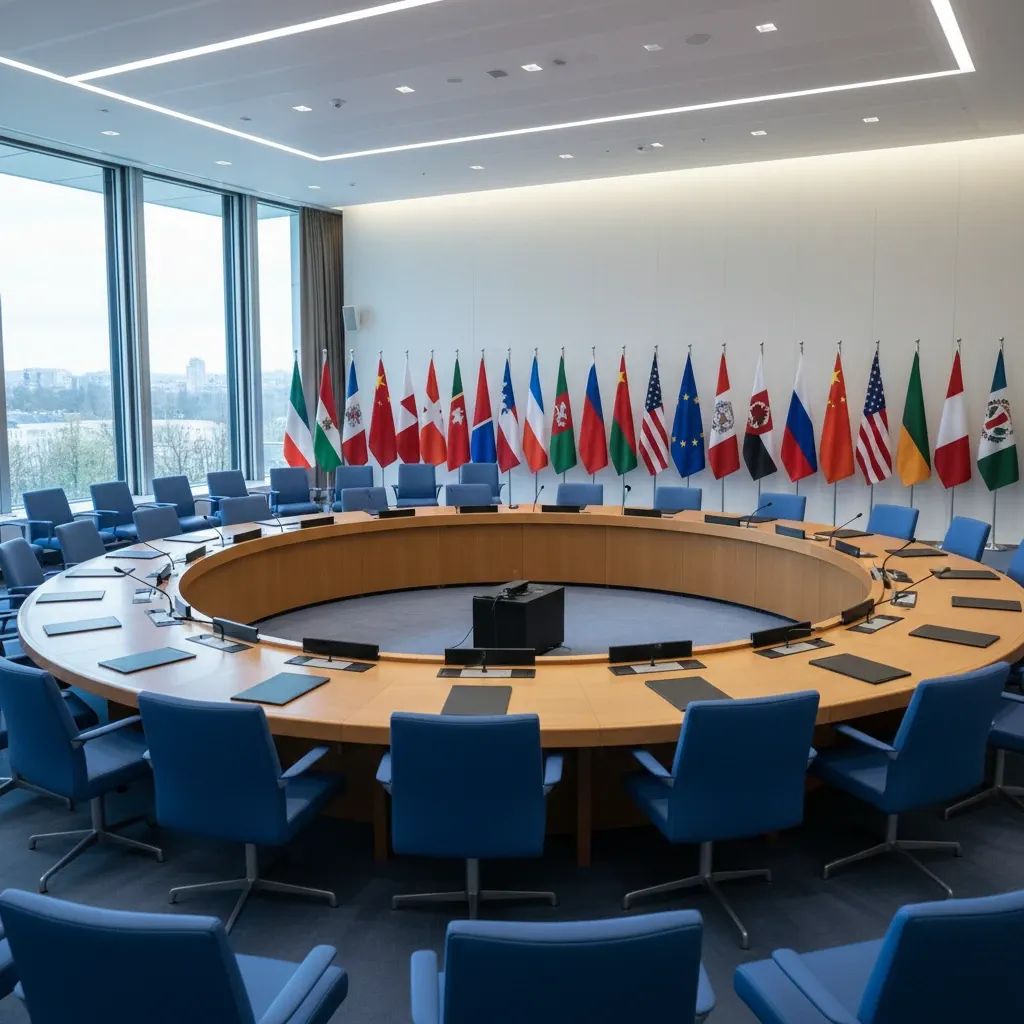
Khalifa Al Mazrouei, speaking as the UAE's Counselor at the Permanent Mission in Geneva during the Human Rights Council's 61st session, took the offensive. Rather than directly addressing claims that Abu Dhabi has supplied advanced weaponry to the Rapid Support Forces (RSF)—the militia group now occupying Darfur—he pivoted to cataloging alleged atrocities by the opposing Sudanese Armed Forces (SAF).
The UAE's case was detailed. According to Al Mazrouei's testimony, the SAF has systematically bombed hospitals, schools, and markets using drone strikes. He presented credible reports of extrajudicial killings, arbitrary detention, and widespread sexual violence against women, girls, humanitarian workers, and medical personnel. Most provocatively, he asserted that the SAF has deployed chemical weapons, a claim backed by months of independent investigation.
The counterattack had a strategic purpose: frame the accuser (Sudan's government) as the true culprit and position the UAE as merely pointing out uncomfortable truths. Shahad Matar, the UAE's Deputy Permanent Representative, reinforced the message, emphasizing that the accusing party had "lost credibility" by seizing power alongside the RSF and "obstructing humanitarian access."
What the UAE did not do was directly address the substance of the arms allegations in its statement. Instead, the focus remained on counter-accusations about SAF conduct.
The Evidence Problem: Real but Incomplete
The chemical weapons claim requires scrutiny because it illustrates the larger accountability vacuum. In May 2025, the United States government formally determined that the SAF had used chemical weapons in late 2024. Yet this determination followed months of ambiguity. American officials did not immediately publish the intelligence underpinning the claim.
The breakthrough came from outside official channels. In October 2025, the French investigative outlet France 24 published a detailed investigation with photographic and video evidence. The reporting showed what appeared to be chlorine gas clouds over two specific locations—September 5 and 13, 2024, near the al-Jaili refinery north of Khartoum—and images of industrial chlorine cylinders recovered from a SAF military facility. The British Foreign Office subsequently expressed concern, lending diplomatic weight to the findings.
However, the Organisation for the Prohibition of Chemical Weapons (OPCW), the international body tasked with formal verification, has not yet gained on-ground access to Sudan for independent investigation. This gap between compelling circumstantial evidence and formal confirmation remains unresolved. The SAF has neither admitted nor credibly explained the allegations.
Notably, the RSF has also made chemical weapons claims. In statements issued on March 31, 2025, and reiterated on January 27, 2026, the paramilitary group alleged that it had collected soil samples, water tests, victim testimonies, and video documentation. When an organization credibly accused of genocide raises similar allegations, the claim's reliability becomes harder to assess without independent verification.
The Weaponization Question: Where the Real Tension Lies
Multiple independent investigations—by the UN, Amnesty International, and Human Rights Watch—have documented that advanced weaponry has flowed to the RSF through supply chains involving the UAE, Libya, Chad, Uganda, and the Central African Republic. These findings represent the core of the allegations that the UAE addressed indirectly in Geneva.
In May 2025, Amnesty International published specific findings: Chinese-manufactured guided bombs, howitzers, and drones produced by the Norinco Group (a state-owned Chinese defense contractor) appeared in RSF possession, with procurement chains traced to the UAE. Human Rights Watch separately documented that military-grade vehicles and munitions previously used by the UAE Armed Forces were discovered in RSF-controlled areas of Darfur.
Most notably: leaked UN Security Council documents from July 2024 contained images of Emirati passports allegedly recovered from an RSF-held vehicle in Omdurman. The UAE's ambassador to the United Nations responded by claiming that five of the six passports belonged to humanitarian workers who visited Sudan in May 2022. The response addressed five passports but did not account for the sixth—a detail that fueled skepticism about the broader narrative.
In March 2025, Sudan filed a case at the International Court of Justice (ICJ) alleging that the UAE had violated the 1948 Genocide Convention through its support for the RSF. That case was dismissed in May 2025 on procedural grounds—the court lacked jurisdiction—not on the merits. A legal dismissal is not an exoneration.
The Gold and Resources Angle
Analysts studying UAE-Sudan interests have identified potential financial drivers. Sudan holds substantial reserves of gold, agricultural land, and natural gas. Reporting suggests that gold extracted from RSF-controlled territories is traded through Dubai's commodity markets, though the UAE government has not publicly addressed this claim. The allegation, if verified, would provide strategic rationale for maintaining RSF operational viability.
What Changed in February 2026: The Humanitarian Paradox
On the same day that diplomats exchanged accusations at the Human Rights Council, the United Arab Emirates announced a USD 500 million humanitarian pledge at a U.S.-led donors' conference for Sudan. The gesture signals that Abu Dhabi is positioning itself as a stabilizer and post-conflict stakeholder.
For residents and businesses based in the UAE, this contradiction creates practical friction. Companies and financial institutions with Sudan-linked operations face heightened scrutiny from international partners. Banks must implement stricter enhanced due diligence protocols and transaction screening. Failure to do so invites Western regulatory action and correspondent banking restrictions.
UAE-based NGOs and humanitarian organizations report that access to Sudan remains contested. Both the SAF and RSF weaponize humanitarian logistics. The USD 500 million commitment, while intended to provide relief, operates in an environment of mutual suspicion. Relief workers navigate zones where every route is disputed and every delivery is scrutinized by armed groups with competing interests.
The Larger Stalemate: Why Blame-Shifting Matters
Sudan has devolved into a grinding military stalemate. The SAF, commanded by General Abdel Fattah al-Burhan, controls Khartoum and much of eastern Sudan. The RSF, led by Mohamed Hamdan Dagalo (known as "Hemedti"), dominates Darfur and parts of Kordofan. Both sides have committed documented atrocities.
In January 2025, SAF-aligned militia forces called the Sudan Shield Forces carried out an attack in Tayba village (Gezira state), killing at least 26 civilians. Human Rights Watch classified the attack as a war crime and potential crime against humanity. The UN High Commissioner for Human Rights, Volker Türk, reported in February 2026 that civilian killings surged 250% in 2025 compared to 2024. The UN Independent International Fact-Finding Mission documented that both sides are deliberately targeting civilians and destroying hospitals, schools, and water infrastructure.
In February 2026, the same Human Rights Council session hearing the UAE's statement also received alarming findings: a UN fact-finding report classified RSF actions in El Fasher in October 2025 as displaying "clear hallmarks of genocide" targeting the Zaghawa and Fur ethnic communities. This characterization carries legal and moral weight within international accountability frameworks.
The Mediation Machinery: Stalled and Fractured
The international community has attempted to move beyond recrimination toward settlement. The "Quad" mediation initiative—comprising the United States, Saudi Arabia, Egypt, and the UAE—has sought to broker a humanitarian ceasefire. The UN Under-Secretary-General for Political and Peacebuilding Affairs cautiously welcomed the effort in February 2026 as a "critical step towards de-escalation."
Yet progress remains limited. Diplomats report that tensions between Saudi Arabia and the UAE have slowed the Quad's effectiveness, as the two Gulf powers hold competing strategic interests in Sudan. Saudi Arabia tilts toward Egypt and the SAF; the UAE's alleged RSF backing represents a structural contradiction. That asymmetry undermines the mediators' ability to present unified pressure.
Simultaneously, the Sudan Core Group—comprised of Germany, Ireland, the Netherlands, Norway, and the United Kingdom—has called for an expanded UN arms embargo and announced plans to establish a coalition for atrocity prevention and justice. The UN Security Council convened repeatedly in February 2026, with the United States, United Kingdom, and France advocating for targeted sanctions against military commanders from both warring parties.
Arms continue to flow despite embargo language. The supply networks remain opaque and enforcement weak.
For People in the UAE: Practical Implications Now
For banking and financial sector employees, enhanced due diligence protocols are already in place. Sudan-linked transactions require additional documentation, source verification, and compliance reviews. Some institutions have reduced exposure to Sudan-related business entirely. If you handle international transfers or work in compliance, expect expanded workloads and stricter internal approval processes.
For business owners and traders with Sudan operations or exposure through intermediaries, reputational and legal risks are escalating. Asset freezes, though rare, are possible for entities found in violation of evolving sanctions regimes. Companies should conduct comprehensive Sudan exposure audits and prepare for potential Western regulatory action.
For humanitarian workers and NGO staff, the situation presents acute challenges. Access remains contested by armed groups. Deliveries are weaponized. Organizations should prepare for prolonged operational restrictions and political obstacles to aid delivery.
For the broader expatriate community, the implications are less direct but consequential. The UAE's international reputation and diplomatic positioning affect visa policies, banking relationships, and investment climate. Prolonged association with credible allegations of arms support to parties credibly accused of genocide creates reputational friction in Western capitals. This affects corporate contracts, international partnerships, and the overall business environment for UAE-based enterprises.
Second, the diplomatic fracture signals that no near-term political settlement is likely. The Quad mediation remains aspirational; the Sudan Core Group's calls for expanded embargoes lack enforcement capacity. Companies betting on Sudan's stabilization should prepare for prolonged volatility. The humanitarian crisis will worsen before it improves. Investors with exposure should model long-tail risk scenarios.
The Theater Obscures the Dysfunction
The Geneva exchange on February 26 was diplomatic theater—effective for domestic audiences and international constituencies, but functionally empty. The UAE pointed to documented SAF atrocities. Sudan's government pointed to documented RSF arms supplies. Both accusations contain evidentiary support. Neither side moved toward genuine accountability.
The result is what diplomats term "blame-shift accountability": mutual accusations that delays investigation, postpones justice, and leaves both parties claiming victimhood while civilians endure escalating violence. The UN Fact-Finding Mission's characterization of RSF actions in El Fasher as genocide remains unadjudicated. The SAF's alleged chemical weapons use awaits OPCW verification. The UAE's alleged arms transfers await formal investigation and enforcement.
Meanwhile, Sudan's death toll climbs. Displacement surges. Infrastructure collapses. The international community trades accusations instead of action.
For residents of the United Arab Emirates, the takeaway is clear: official rhetoric about regional mediation and humanitarian leadership operates alongside documented arms allegations that remain unresolved. The contradiction will not resolve quickly. The business, legal, and reputational costs will accumulate as Western governments and international bodies intensify scrutiny. The humanitarian imperative remains real and urgent. The path toward accountability remains distant.


