
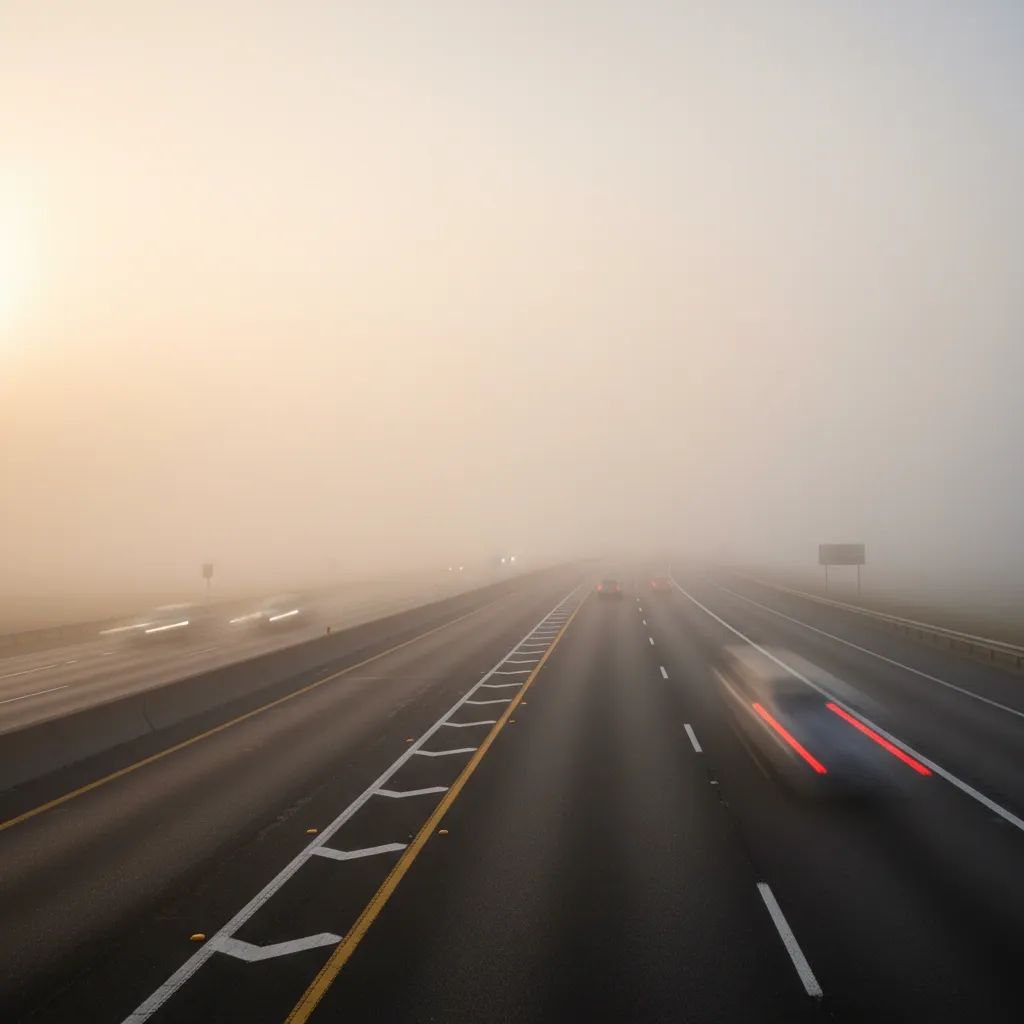
The United Arab Emirates is experiencing dense fog across coastal areas and islands through at least Wednesday morning, with visibility expected to be severely reduced. The National Centre of Meteorology has issued alerts affecting travel and transportation through February 28.
What You Need to Know
• Visibility will be severely reduced in coastal and island zones between 23:30 Tuesday and 10:00 Wednesday morning, with fog expected to persist through February 28
• Speed reduction is recommended to no more than 80 km/h during fog conditions on major highways
• Hazard lights should not be used while driving in fog conditions; they should only be used when your vehicle is completely stationary
• Maintain safe following distances and avoid lane changes when visibility is compromised
Why Fog Happens in UAE Winter
Fog in the UAE during late winter occurs when atmospheric conditions trap moisture near ground level overnight. As temperatures drop during early morning hours—typically between 3:00 AM and 10:00 AM—moisture condenses rapidly, creating reduced visibility.
Current conditions are being monitored by the National Centre of Meteorology, which continues to assess the situation through February 28.
How to Drive Safely in Fog
Reduce your speed. Slow down to ensure you can stop completely within the distance you can actually see ahead of you. The 80 km/h recommendation on highways reflects this principle—maintaining lower speeds gives you adequate reaction time if you encounter a stationary vehicle or obstacle.
Use low-beam headlights. High beams reflect off fog particles and reduce visibility rather than improve it. Modern vehicles with fog lights should activate them, as they're designed to cut through mist at road level.
Do not use hazard lights while driving. Hazard lights create confusion about your vehicle's status and intentions. They should only be used when your vehicle is parked or stationary. If visibility becomes so severe that you cannot see safely ahead, gradually reduce speed and move toward a service area, petrol station, or designated stopping point where you can safely pull off the roadway.
Maintain your lane and avoid overtaking. When visibility is severely limited, lane changes and overtaking increase the risk of collision. Use road markings and reflective studs as navigation guides and stay in your lane.
Keep your windscreen clear. Use continuous wipers and activate your vehicle's defogger system to maintain glass clarity, as fog creates internal condensation that compounds external visibility problems.
Communicate your presence. Use low-beam headlights throughout fog conditions so other drivers can see where you are.
Planning Your Journey
Before departing, check the National Centre of Meteorology alerts for real-time visibility updates. If conditions have deteriorated to dangerous levels, delay your journey rather than attempting to drive through severe fog.
Verify your vehicle is fog-ready: functioning headlights and fog lights, operational windscreen wipers, and accessible defogger functionality.
If you have significant appointments, consider departing earlier than normal to provide buffer time. Attempting to rush through dense fog doesn't offset the increased collision risk.
Inform others of your planned route and expected arrival time. This ensures people are aware of your movements during hazardous conditions.
When to Stop
There's a visibility threshold beyond which continuing to drive becomes unsafe. If you can barely see more than one vehicle length ahead, you should gradually reduce speed and navigate toward a safe stopping point. Never stop on a highway shoulder or main road where oncoming drivers won't detect your vehicle until it's too late.
Road Conditions Through February 28
The National Centre of Meteorology confirms fog conditions will persist through February 28. Temperatures are expected to rise in early March, which should gradually dissipate the atmospheric conditions creating the fog. Visibility should return to normal parameters over the first week of March.
Until that point, all road users should maintain heightened attention. Following safe driving practices during fog conditions—reducing speed, using appropriate lighting, and maintaining safe distances—remains essential for everyone's safety on UAE roads.


