
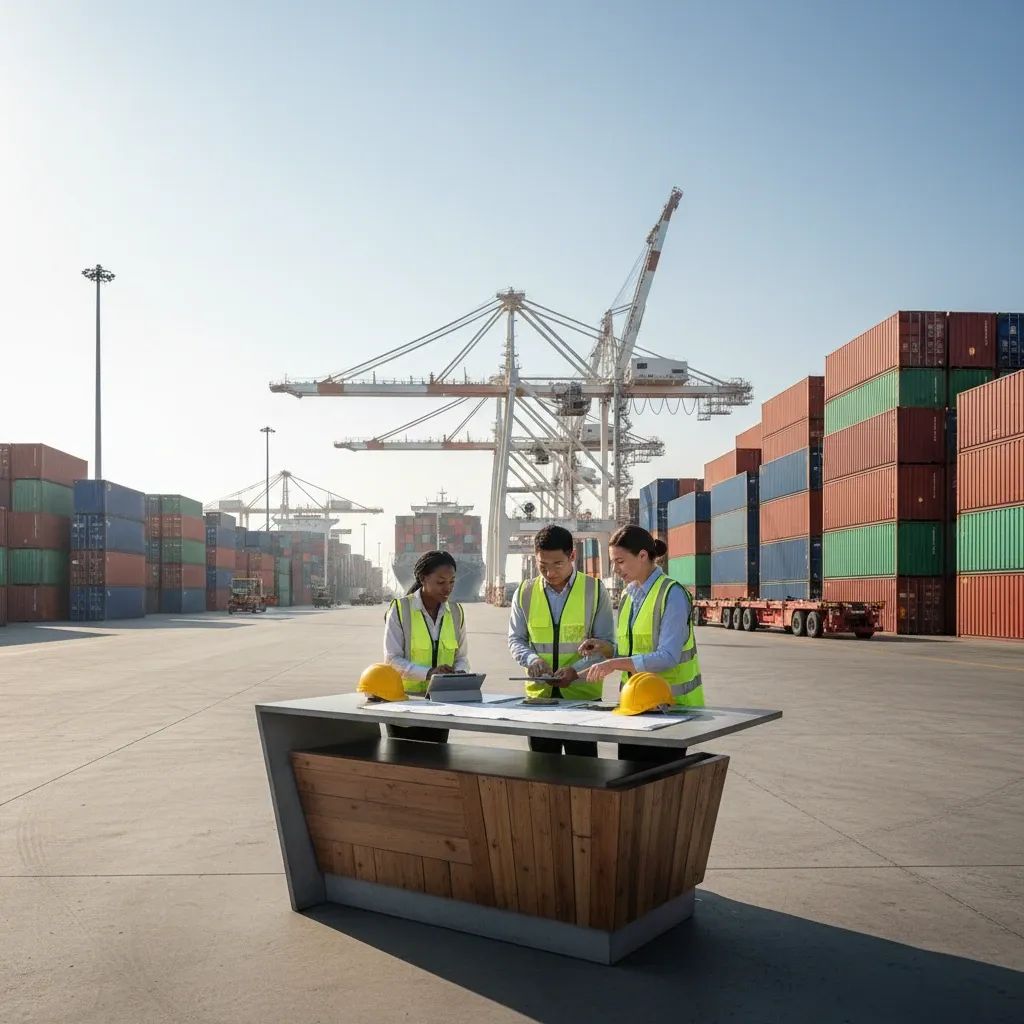
Regulatory Compliance: The New Frontier Eroding Trade Advantage
Tariffs commanded headlines for decades. Today, a different obstacle—less visible but far more costly—determines who trades and who does not. According to UNCTAD's May 2026 Global Trade Update, technical regulations, health certifications, and safety procedures now impose higher costs than tariffs in 88% of trade transactions. For least developed countries, this shift is devastating: roughly 10% of potential exports to G20 nations vanish annually because firms cannot navigate or afford compliance requirements.
Why This Matters
• The gap widens: Least developed countries face both surging tariffs and expanding certification demands simultaneously—a double blow that developed economies rarely encounter.
• Information is currency: Unexplained or unannounced regulatory shifts carry costs equivalent to imposing a 28% tariff—more punitive than formal duties in most industries.
• Scale determines survival: Smaller suppliers lack in-house compliance teams and testing infrastructure, pricing them out of markets that larger competitors can access.
The Invisible Tax on Trade
When a Kenyan flower exporter ships carnations to Europe, tariffs represent only one friction point. Meeting European Union cold chain standards, phytosanitary documentation, packaging labels, and traceability protocols consumes resources. Testing costs accumulate. Certification delays compound. For larger corporations with dedicated compliance divisions, these are routine expenses. For a family-owned operation with 15 employees, they can be prohibitive.
This distinction matters acutely for the United Arab Emirates, which functions as a critical logistics node connecting African and Asian suppliers to global markets. Trade stagnation upstream directly throttles throughput at Jebel Ali Port and Khalifa Port. When least developed country exporters are priced out of international markets by regulatory compliance costs, the consequences ripple through the Emirates' logistics sector. Freight volumes shrink. Customs brokers process fewer transactions. UAE-based trading houses find fewer goods to re-export. The regional economy absorbs the slowdown.
The regulations themselves serve genuine purposes. Environmental protections, food safety protocols, and worker welfare standards prevent harm and protect consumers. The problem is not their existence but their administration. Requirements scatter across multiple agency websites. Information appears in different languages. Notifications arrive with minimal notice. A producer planning a production run risks discovering mid-process that new labeling specifications apply. The uncertainty forces costly adjustments or market rejection.
Who Bears the Cost: The Exporter's Hierarchy
A multinational corporation headquartered in Geneva can employ teams to track regulatory changes across 50 markets. It can retrofit production facilities when standards shift. It can absorb testing expenses as operational overhead. A cooperative of 200 coffee farmers in Uganda cannot. Neither can a garment workshop in Bangladesh or a spice producer in Mali.
This inequality has calcified. In 2025, while developed economies raised average tariffs by roughly 10%, least developed countries absorbed tariff increases averaging 18%—nearly double. Simultaneously, compliance costs mounted. Nations introduced environmental standards, social auditing requirements, and supply chain transparency mandates. Producers in poor countries faced a compounding burden: tariffs rose while regulatory expectations expanded.
The outcome: market exclusion through procedure rather than law. A Vietnamese textile factory might manufacture garments meeting every international safety standard, yet lack the documentation to prove it. A Ugandan coffee exporter might produce genuinely superior beans, yet cannot afford the testing to demonstrate compliance with the EU Deforestation Regulation, which demands proof that coffee originated from land not cleared after 2020.
Least developed countries forfeit 10% of possible G20 trade through inability to comply. In absolute terms, this represents billions of dollars in foregone export revenue. Translated per-country, it means factories operating below capacity, investment capital that never materializes, and youth unemployment driving migration pressure.
The Information Bottleneck
UNCTAD's research identifies a concrete lever: transparency. When governments and international bodies clearly communicate requirements and establish predictable timelines, exporters can plan accordingly. Currently, that does not happen. Regulatory information remains fragmented. Notifications travel slowly. Changes appear without warning. This ambiguity imposes what economists call "uncertainty costs"—premiums businesses pay simply because they cannot predict what rules will apply.
A practical metric illustrates the opportunity: improving information access could reduce non-tariff measure costs by approximately 19% across supply chains. For a least developed country producer operating on thin margins, a 19% cost reduction means the difference between profitability and closure. For UAE logistics operators, it translates to faster cargo movement and reduced demurrage expenses.
The East African Community has recognized this. By June 30, 2026, member states committed to eliminating bureaucratic delays, standardizing labeling requirements, and streamlining licensing procedures. Initial results are measurable. TradeMark Africa's 2024-2025 assessment documented that when East African governments systematized their regulatory notifications, certification timelines shortened substantially. Goods moved faster. Costs fell.
The African Continental Free Trade Area is testing alignment at continental scale. By harmonizing technical standards and mutually recognizing compliance certificates across member nations, the initiative aims to reduce agricultural and manufacturing compliance costs by 30% to 40%. The mechanics are straightforward: when a coffee exporter earns certification in Kenya, it becomes valid in Ethiopia, Rwanda, and across the bloc. No redundant testing. No duplicative certifications. Producers avoid costly redesigns for each market.
Strategic Implications for United Arab Emirates Stakeholders
For traders and investors based in the United Arab Emirates, the implications reshape due diligence. Sourcing decisions now hinge on suppliers' regulatory capacity, not merely price and delivery schedules. Can your Vietnamese manufacturer navigate EU chemical restrictions? Does your East African partner hold international ISO certifications? Will they absorb testing costs when standards evolve, or will those expenses flow backward to you?
Compliance audits are no longer optional.
UAE retail chains sourcing fresh produce or textiles from least developed countries should assess supplier regulatory standing before commitment. A manufacturing partnership that appears sound on balance sheets collapses if the supplier cannot access testing labs or navigate certification procedures. Supply chain disruptions—empty shelves, delayed shipments—become liabilities.
For port operators and freight forwarders in Abu Dhabi and Dubai, upstream trade friction directly impacts revenue. Non-tariff barriers upstream shrink the cargo flowing through terminals. Transaction volumes decline. Customs brokers processing fewer declarations. Re-exporters losing competitive advantage when shipments sit awaiting certification clarity.
Policy makers in the Emirates benefit from advocating transparency frameworks internationally. Trade fluidity benefits the UAE disproportionately. When global trade accelerates, logistics hubs prosper. The Emirates' strategic interest lies in supporting capacity-building programs in partner countries—helping their regulators communicate standards clearly, enabling their exporters to access testing facilities. This is enlightened self-interest: a more efficient global supply chain benefits Dubai's logistics ecosystem, Abu Dhabi's traders, and the entire emirates economy.
Global Efforts and Remaining Gaps
The International Trade Centre, supported by the World Bank, operates programs teaching exporters from poor nations how to decode and satisfy technical requirements. The ITC's Non-Tariff Measures Programme helps small and medium enterprises identify obstacles, establishes national complaint channels, and trains policymakers on best practices.
The World Trade Organization offers Specific Trade Concerns—a formal mechanism allowing countries to challenge restrictions deemed excessive. Participation from least developed countries remains thin, reflecting broader capacity constraints. Few poor-country governments employ technical staff capable of lodging formal challenges or negotiating regulatory adjustments.
UNCTAD projects continued expansion of non-tariff measures through 2026, driven by environmental concerns, social priorities, and security anxieties layered atop persistent protectionist impulses. Without deliberate action—systematic transparency, regulatory cooperation, and technical support—trade will progressively tighten in practice, even where official tariffs remain moderate.
The Navigation Path Forward
For the United Arab Emirates, the message crystallizes. As a trading nation with minimal domestic production but strategic positioning between Asia, Africa, and Europe, the Emirates thrives when global trade flows smoothly. When bureaucratic friction increases elsewhere, the UAE's logistics sector suffers. The calculus is straightforward: advocating for transparency, investing in partner-country capacity, and supporting regional cooperation initiatives is not altruism. It is competitive positioning.
The conversation has shifted decisively from tariff reduction—the preoccupation of three decades—to regulatory cooperation and information access. The barriers reshaping global commerce are becoming visible. And visibility, history suggests, is the necessary first step toward dismantling them.


