
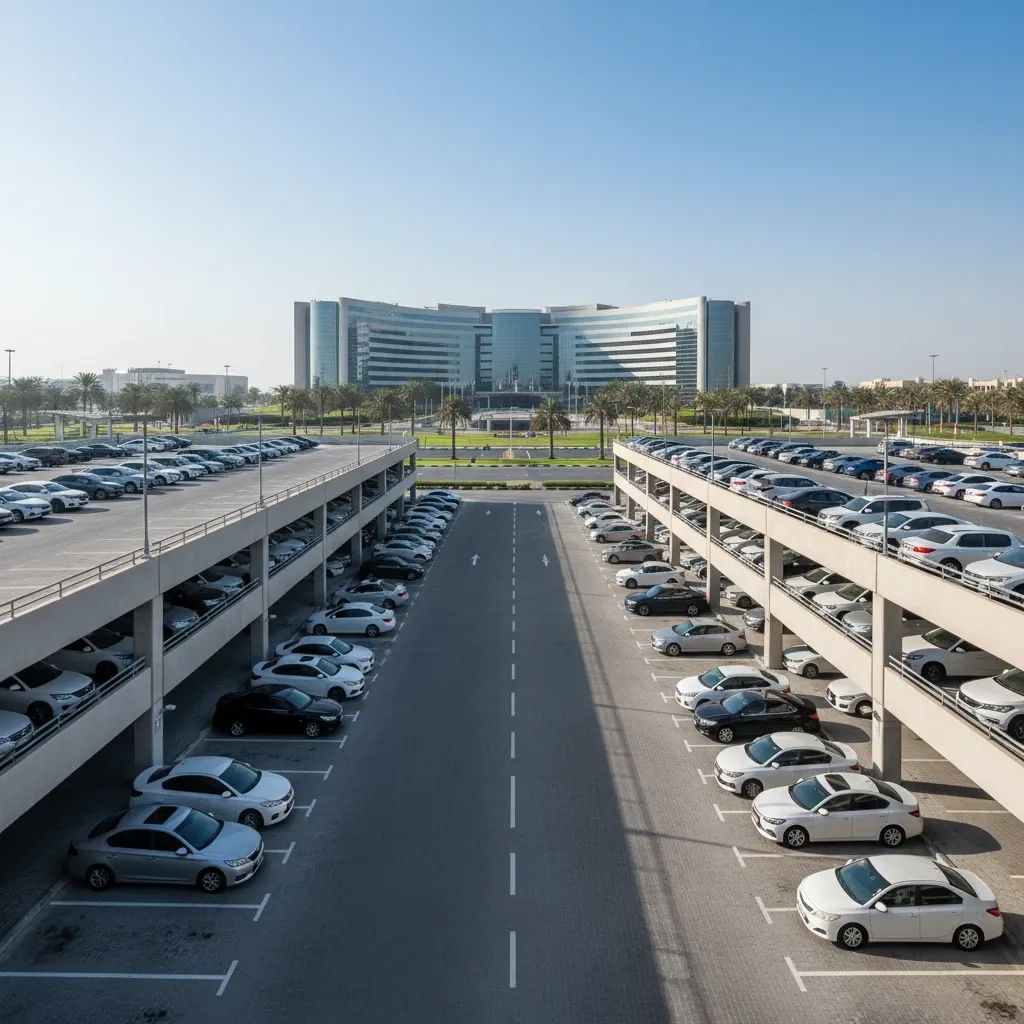
Parking as a Customer Magnet: Dubai's New Retail Incentive Flips the Script
Parkin, Dubai's parking infrastructure operator, has flipped a business problem into an opportunity. Starting May 1, the company launched a scheme that transforms paid parking—usually a deterrent to street-level shopping—into a refundable expense when customers buy from small neighborhood retailers. The move arrives amid a broader governmental push to keep commerce flowing through Dubai's independent shops rather than consolidating in megamalls.
Why This Matters:
• Parking fees become redeemable credits: Customers who shop at participating outlets recoup their parking cost as wallet balance on the Parkin app, usable for future parking sessions.
• Zero friction for merchants: Small businesses pay nothing to join; they simply validate parking transactions at checkout, turning parking from a customer barrier into a competitive advantage.
• Flexible economics for retailers: Each shop sets its own minimum spend threshold, allowing cycle shops, restaurants, and key cutters to calibrate rewards to their price points.
Quick Guide: What You Need to Know
• Park, shop, get credit: Pay for parking through the Parkin app, shop at a participating retailer, request validation at checkout, and receive your parking fee back as app credit.
• 15+ participating shops: Initial pilot includes retailers across Karama, Jumeirah, Deira, Satwa, and other traditional retail neighborhoods.
• No cost to join: Merchants participate free; customers need only a Parkin account (registered via UAE Pass).
• Your savings add up: Average daily parking rates range from AED 1-2, with monthly and annual credits accumulating for regular shoppers.
How It Works in Practice
The mechanics are straightforward for end users, though they require digital participation. A customer parks in any Parkin paid zone near a participating business, pays the fee through the app, and completes their purchase. At checkout, they request parking validation. The merchant accesses the Parkin business portal via smartphone, enters the customer's registered mobile number, and triggers a credit transfer. Within moments, the parking fee amount lands in the customer's Parkin wallet—not as cash, but as balance available for the next parking occasion.
The system hinges on two prerequisites: the customer must have a Parkin account (registration takes minutes using UAE Pass, the national digital identity system) and the retailer must be enrolled in the program. Neither step involves fees or complex approvals.
What makes the program distinct from traditional loyalty schemes is its laser focus. It doesn't gamify spending or promise accumulated points. It simply addresses a single, tangible pain point: the cost of stopping at a street-level shop when mall parking is free. By eliminating that friction, the initiative targets a known behavioral gap—drivers choosing malls not because of better selection but because parking doesn't feel like a penalty.
The Participating Merchants and Geographic Spread
As of early May, 15 businesses have signed on, predominantly concentrated in traditional retail neighborhoods. CycleToCycle operates out of Karama, as do Soam Vegetarian, Al Damyati Plus, and Kavala Mane. Beirut Blendz operates from Jumeirah, while San Diego Key Cutting and Al Embratoor anchor Deira. Ravi Restaurant serves Satwa, and Manouche N' Bites brings the pilot to Jumeirah Lake Towers. The spread reflects a deliberate geographic strategy: Parkin is testing the model across established neighborhood retail clusters rather than concentrating in a single zone.
Parkin has not announced a timeline for expansion beyond the pilot cohort, but the company has signaled that additional merchants will be invited as operational data accumulates. The lack of enrollment cost likely removes a major barrier to uptake, though broader merchant awareness and digital literacy will determine adoption velocity.
What Makes This Economically Sustainable
From Parkin's perspective, the initiative generates no direct revenue loss. Customers continue to pay parking fees upfront through the app—those transactions are complete. What the company does is reallocate a portion of existing revenue (via wallet credits) to merchants who participate. The parking fee doesn't disappear; it's simply transferred from the customer's pocket to the customer's future parking balance, while the merchant absorbs the rebate cost as a customer acquisition expense.
This subtle financial structure protects Parkin's core business—parking revenue—while positioning the company as an enabler of small commerce. From the merchant's angle, the cost is transparent and controllable. A restaurant can offer parking refunds only on orders above AED 40, or a cycle shop can apply the rebate to purchases over AED 50. Each merchant calibrates the threshold based on transaction margins and competitive positioning. Notably, Parkin has not published a master directory of these thresholds, meaning customers discover them by inquiry at checkout—an admittedly imperfect user experience but one that creates negotiation flexibility for merchants.
For Residents: A Practical Path to Savings
UAE residents who drive in Dubai stand to reduce a recurring, non-discretionary expense. The average Parkin daily rate ranges from AED 1 to 2 depending on location and time of day. Over a year, frequent visitors to neighborhood shops can accumulate modest but meaningful credits. The real value proposition isn't a one-off promotion; it's the behavioral reorientation toward local retail.
However, several practical considerations warrant attention. First, the system requires a Parkin account linked to a registered UAE mobile number and email. Tourists and short-term visitors without UAE Pass credentials will struggle to participate. Second, the lack of standardized spend minimums creates ambiguity. Without a published lookup table, customers must ask before they shop—a friction point that undermines the program's simplicity. Third, wallet credits are non-monetary; they exist as Parkin balance, not cash. Customers must either return to paid parking zones to use them or forfeit them if they switch parking operators or relocate outside Dubai.
For residents with regular driving patterns and proximity to participating shops, the program functions as a quiet discount mechanism. For occasional shoppers or those further from initial pilot locations, the benefit may feel marginal until the merchant network expands significantly.
Parking as Urban Strategy
The program represents a subtle but meaningful reframing of how cities can use existing assets to influence commerce patterns. Parking is typically viewed as an operational cost or revenue source for municipalities. Here, Parkin leverages its 250,000-plus spaces as a distribution channel for foot traffic—essentially using infrastructure to steer customer behavior toward underperforming retail zones.
Success hinges on three variables: merchant adoption beyond the pilot phase, customer awareness and digital engagement, and whether the parking refund is compelling enough to override consumer preference for mall shopping. Early indicators suggest the first two are progressing, though scale remains limited. The third question—whether parking costs are the primary barrier to local retail or merely one among many (ambiance, selection, convenience hours)—will determine whether the program achieves sustained commercial impact or remains a novelty benefit for a narrow user base.
For now, the initiative serves as a low-cost experiment in urban design and behavioral economics, allowing both Parkin and the Dubai government to test whether infrastructure can function as policy.


