
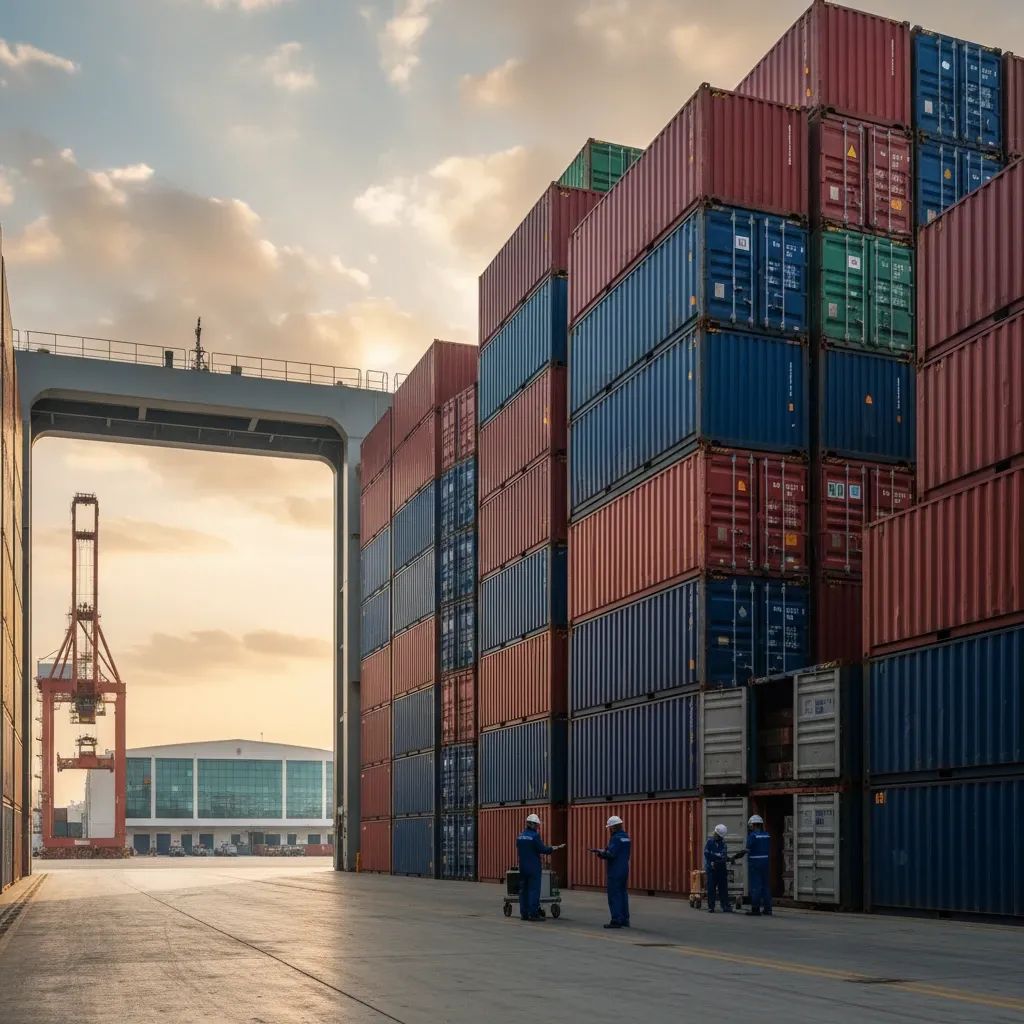
Researchers have discovered that the multibillion-dollar counterfeit goods industry depends on systematic labour abuse—a connection that directly matters for United Arab Emirates residents, businesses, and policymakers navigating global trade responsibilities.
Key Takeaways
• **Counterfeit manufacturing thrives where labour protections are weakest, creating parallel criminal ecosystems that exploit workers while flooding legitimate markets.
• **UAE's position as a major trade and logistics hub means counterfeit goods often pass through Emirates jurisdictions, requiring enhanced vigilance to avoid inadvertent complicity.
• Regulatory tightening is coming—expect customs enforcement to increasingly link product authenticity checks with labour rights compliance, affecting supply chains across retail, logistics, and manufacturing sectors.
• Consumer choices carry hidden costs—purchasing counterfeit goods indirectly finances trafficking networks that operate across continents.
The Hidden Architecture of Illicit Manufacturing
When customs officials intercept containers of fake designer goods or counterfeit electronics, they're not simply discovering trademark violations. A comprehensive analysis by the OECD and European Union Intellectual Property Office released in February 2026 reveals a deeper reality: counterfeit production networks function as labour exploitation enterprises by design, not accident.
The research examined customs seizure data alongside international labour statistics, comparing which countries most frequently appear in seizure records with their respective workplace conditions. The pattern proved inescapable—nations identified as major counterfeit sources systematically display inadequate worker protections, excessive working hour demands, and elevated occupational fatality rates. These aren't coincidental correlations; they're structural prerequisites.
Weak governance and limited regulatory enforcement create environments where both intellectual property crimes and human rights abuses flourish simultaneously. Criminal operators intentionally establish counterfeit production in jurisdictions where labour violations carry minimal consequences. The absence of workplace safety standards, wage theft enforcement, and workers' rights protection reduces production costs while increasing profit margins. In this calculus, exploitative labour transforms from an unfortunate side effect into a deliberate business strategy.
How Exploitation Becomes Competitive Advantage
Counterfeit manufacturers face a straightforward economic problem: producing fake goods at prices consumers expect requires eliminating costs that legitimate producers must bear. Labour represents one of the largest production expenses, and criminal networks have discovered multiple methods to compress it to near-zero.
Forced labour eliminates wage payments entirely. Workers coerced into manufacturing facilities through debt bondage, confiscated documents, or threats provide their output without financial compensation. Their silence is ensured through physical confinement, psychological manipulation, or threats against family members.
Informal employment erases regulatory costs. By situating manufacturing in underground workshops rather than registered facilities, counterfeit operators avoid safety inspections, avoid payroll taxation, and avoid compliance documentation. Workers hired through informal channels possess no legal standing to demand fair wages or adequate conditions.
Child labour provides vulnerability and control. Young workers cannot legally organize, cannot report abuse without family consequences, and cannot advocate for rights they don't understand. They represent a compliant workforce that accepts whatever minimal compensation is offered.
In economies where poverty is endemic and employment alternatives are scarce, these exploitation models prove devastatingly effective. Traffickers identify vulnerable individuals—migrants, displaced persons, individuals without education or family support networks—and coerce them into counterfeit manufacturing through calculated deception and escalating control.
Geographic Realities and Source Patterns
The OECD-EUIPO research deliberately avoided naming specific countries, maintaining diplomatic neutrality while presenting clear methodological findings. However, the underlying data patterns are unmistakable: regions with the highest prevalence of forced labour, child labour, and workplace safety violations appear with extraordinary frequency in international customs records identifying counterfeit sources.
When researchers cross-referenced customs interception data with labour market statistics—average working hours, occupational injury rates, labour protection legislation, enforcement capacity—geographical clusters emerged. Economies experiencing severe labour exploitation simultaneously function as major counterfeit production hubs. Jurisdictions strengthening labour protections and workplace enforcement witness corresponding reductions in counterfeit manufacturing activity.
For the United Arab Emirates, positioned at a critical juncture connecting Asian manufacturers with European and African consumer markets, these geographic patterns carry operational weight. Counterfeit goods manufactured under traumatic conditions in distant jurisdictions frequently transit through Emirates ports, free zones, and logistics hubs en route to final markets across Europe, the Middle East, and Africa.
The findings suggest that enhanced screening mechanisms will increasingly target shipments originating from identified high-risk regions—not based on stereotypes but on documented correlations between labour exploitation intensity and counterfeit production capacity. This creates both enforcement challenges and opportunities for compliance-focused businesses.
The Economics of Illicit Scale
Counterfeit and pirated goods represent a substantial criminal economy that rivals the GDP of most developing nations. What the OECD-EUIPO analysis reveals is that a significant portion of this economic value is extracted directly through labour theft and exploitation.
Consider the mechanics: a counterfeit clothing manufacturer operating in a jurisdiction with weak enforcement might produce garments for roughly $2 per unit through exploitative labour, then sell them to distributors for $15, achieving profit margins of 650%. A legitimate manufacturer in a jurisdiction with adequate labour protections incurs labour costs of $8-12 per unit, limiting competitive pricing. The counterfeit operator's profitability depends entirely on eliminating labour costs that legitimate competitors cannot escape.
Scale this calculation across millions of counterfeit items—counterfeit pharmaceuticals, automotive parts, electronics, luxury goods, cosmetics—and the cumulative exploitation becomes staggering. The research indicates that substantial portions of criminal proceeds derive directly from wage theft, forced labour arrangements, and child labour, not merely from intellectual property violations.
This economic reality explains why conventional enforcement approaches have failed. Customs agencies can intercept cargo and destroy counterfeit goods; this disrupts supply temporarily but doesn't eliminate criminal incentive. As long as exploitative labour practices reduce production costs to unsustainable levels for legitimate competitors, criminal enterprises will continue rebuilding supply chains. Disruption requires making exploitation expensive—either through enforcement that increases labour costs or through demand reduction that decreases counterfeit profitability.
Implications for UAE Residents and Economic Actors
Residents of the United Arab Emirates encounter counterfeit goods frequently—fake designer handbags in informal retail markets, counterfeit electronic components in unauthorized channels, pirated medications, fraudulent automotive parts masquerading as originals. Until recently, these purchases represented primarily a consumer protection concern and intellectual property violation.
The OECD-EUIPO research reframes this consumption through a human rights lens. A counterfeit designer bag purchased in an informal market represents dozens or potentially hundreds of unpaid labour hours extracted through coercion from vulnerable individuals thousands of kilometres away. The price advantage the consumer enjoys comes directly from wages that were never paid, safety conditions that were never provided, and human dignity that was systematically violated.
For businesses operating from the United Arab Emirates—retailers, logistics companies, manufacturers, traders—the study's findings signal regulatory evolution approaching rapidly. International jurisdictions are implementing mandatory supply chain transparency requirements, labour compliance verification mechanisms, and restrictions on goods produced under exploitative conditions. The US Withhold Release Orders now block products manufactured using forced labour. The European Union Forced Labour Regulation requires companies to conduct due diligence on supply chains. Similar frameworks are proliferating globally.
The UAE government's commitment to positioning the Emirates as a responsible international business partner suggests alignment with these emerging standards rather than resistance. Companies maintaining supply chains through jurisdictions with documented labour exploitation face reputational and legal risks. Those implementing transparent verification and ethical sourcing protocols gain competitive advantages as multinational corporations increasingly screen suppliers for human rights compliance.
UAE's Existing Counterfeit Enforcement Framework
The United Arab Emirates maintains established mechanisms addressing counterfeit goods across its major trade corridors. Dubai Customs and Abu Dhabi Ports Authority conduct ongoing screening of imported goods, with protocols coordinating between Jebel Ali Port, Port Rashid, and various Free Zones including Jebel Ali Free Zone and Dubai Airport Free Zone. The Ministry of Economy enforces intellectual property protections and investigates trademark violations across retail and wholesale channels.
Under UAE law, purchasing, selling, or distributing counterfeit goods violates federal intellectual property legislation. Penalties include fines ranging from AED 50,000 to AED 500,000 for individuals, with potential imprisonment for aggravated violations. Importers face cargo seizure and confiscation at customs boundaries. Residents encountering counterfeit goods in retail markets can report violations to the Ministry of Economy's Consumer Protection Department or contact local Dubai Municipality enforcement officers for informal retail locations.
Logistics operators transiting goods through Emirates jurisdictions will increasingly encounter tightening customs scrutiny linking product authenticity with labour rights compliance. Free zone operators benefit from positioning themselves as centres for verified ethical commerce rather than locations facilitating supply chain opacity.
The Enforcement Evolution Taking Shape
International cooperation on the counterfeiting-exploitation nexus represents a significant departure from traditional intellectual property enforcement approaches. Historically, customs agencies focused narrowly on trademark violations and counterfeit detection, while labour ministries operated independently addressing workplace conditions. These compartmentalized systems left criminal networks exploiting the jurisdictional gaps between authorities.
Enforcement is evolving toward integrated approaches. US Customs and Border Protection now coordinates forced labour prevention teams alongside counterfeit detection units, recognizing that seizing goods produced through exploitation serves dual purposes: disrupting trafficking networks while protecting intellectual property. Hong Kong Customs has established formal cooperation mechanisms with mainland Chinese and Macau counterparts, conducting joint cross-border operations targeting counterfeit transshipment routes and investigating labour conditions in manufacturing facilities.
Memorandums of understanding between customs agencies and labour enforcement bodies are establishing formal data-sharing protocols. Training programs now educate customs officers to recognize labour exploitation indicators—cramped manufacturing spaces, workers with restricted movement, inadequate safety equipment, excessive working hour documentation—alongside traditional counterfeit detection techniques.
For the United Arab Emirates, integration into these evolving enforcement networks represents both obligation and opportunity. Customs agencies implementing robust labour-linked screening mechanisms strengthen port security while demonstrating commitment to international labour standards. Businesses that exceed minimum compliance requirements—conducting voluntary supply chain audits, implementing blockchain-based product traceability, certifying manufacturing partners—position themselves advantageously as global standards continue tightening.
The research suggests that ports and free zones implementing comprehensive ethical commerce protocols may attract premium multinational clients seeking verified supply chain partners. Conversely, jurisdictions perceived as facilitating opacity or enabling exploitation risk reputational damage and regulatory restrictions from international partners.
Connecting Consumer Awareness to Market Change
The study emphasizes that disrupting the counterfeiting-exploitation nexus requires simultaneous action across multiple fronts: enhanced enforcement, stricter labour protections, consumer education, and supply chain transparency. No single intervention proves sufficient because criminal networks adapt to isolated enforcement approaches.
Consumer awareness campaigns connecting counterfeit purchases to labour exploitation generate demand-side pressure that reinforces supply-side enforcement. When consumers understand that purchasing a suspiciously discounted designer good finances trafficking networks, some modify purchasing behaviour. This reduced demand makes counterfeiting less profitable, diminishing criminal incentive.
Digital product passports and blockchain-based supply chain tracking systems increase visibility of manufacturing origins and labour practices. When consumers can verify that a product was manufactured in facilities meeting verified labour standards, they gain the information necessary for ethical consumption decisions. Simultaneously, manufacturers face operational pressure to meet transparency requirements.
For residents of the United Arab Emirates navigating marketplace choices, understanding the labour cost structure of counterfeit goods provides rational economic and ethical context. The artificially low prices reflect stolen wages, not manufacturing efficiency.
Integrated Policy Framework Taking Root
The OECD-EUIPO report calls for policy responses combining three distinct elements: strengthened labour governance in source countries, enhanced customs and trade enforcement, and improved data collection enabling better targeting.
Strengthened labour governance requires countries with significant counterfeit production to invest in workplace inspection capacity, enforce penalties for labour violations, and establish functioning workers' rights mechanisms. These measures increase production costs in manufacturing jurisdictions, eliminating the cost advantage that makes counterfeiting profitable. When legitimate and illegitimate producers face equivalent labour cost structures, counterfeit operations become economically unviable.
Enhanced customs enforcement requires adopting sophisticated risk analysis combining product authentication detection with labour rights indicators. Shipments originating from regions with documented labour exploitation should receive proportionally higher inspection scrutiny. Technology enabling rapid verification—advanced imaging, blockchain record checking, DNA analysis for certain product categories—increases interception probability.
Improved data collection creates the information foundation enabling precise enforcement. Current statistics likely dramatically underestimate exploitation prevalence due to the underground nature of both counterfeit manufacturing and labour trafficking. Better measurement systems—combining customs data, labour statistics, trafficking reports, and financial transaction analysis—enable identification of high-probability intervention targets.
These three policy elements function interdependently. Labour governance improvements in source countries eliminate criminal competitive advantage. Customs enforcement disrupts distribution channels. Better data enables increasingly sophisticated targeting. Each reinforces the others' effectiveness.
The Broader Governance Question
Underlying the counterfeiting-labour exploitation nexus lies a fundamental governance reality: regions lacking adequate labour protections, enforcement capacity, and regulatory oversight attract not just counterfeit manufacturers but the full spectrum of criminal enterprises. Where legitimate business faces regulatory complexity but criminal activity encounters minimal consequences, economic incentives favour illegality.
Conversely, jurisdictions investing in functional labour governance, transparent business frameworks, and enforced rule of law attract legitimate manufacturing investment while deterring criminal operations. The cost structures become unfavourable for illicit activities.
The UAE's positioning as an international business hub with increasingly sophisticated regulatory frameworks reflects recognition of this dynamic. Businesses seek locations offering legitimate opportunities without excessive bureaucratic friction; criminal enterprises require the opposite—permissive environments facilitating opacity. By strengthening governance structures, the Emirates attracts higher-value investment while creating inhospitable conditions for criminal supply chains.
Forward Outlook for the Emirates
The OECD-EUIPO research establishes connections between counterfeiting and labour exploitation that fundamentally change policy calculus. Addressing intellectual property violations and protecting workers' rights transform from separate regulatory concerns into interdependent objectives. Enforcement strategies addressing only trademark violations while ignoring labour abuses prove incomplete because they leave criminal operators' core profitability mechanism intact.
For the United Arab Emirates, this suggests policy evolution toward integrated customs-labour enforcement, supply chain transparency requirements, and potentially mandatory human rights due diligence for businesses operating from Emirates jurisdictions. Rather than representing regulatory burden, these developments align with the government's economic diversification strategy and commitment to sustainable international business practices.
Residents should anticipate marketplace changes: reduced availability of counterfeit goods through enforcement tightening, increased product traceability enabling verification of ethical manufacturing, and evolving consumer awareness connecting consumption choices to labour rights. These changes carry costs—slightly higher prices for certain consumer goods—offset by reduced inadvertent complicity in trafficking networks and the ethical clarity of verified ethical commerce.
Businesses have practical opportunities: audit supply chains now rather than facing future regulatory mandates; implement transparent sourcing documentation; seek certification verifying labour compliance in manufacturing facilities; position operations as participants in responsible international commerce rather than facilitators of opacity. Companies implementing voluntary standards ahead of mandatory requirements gain competitive advantages as enforcement frameworks tighten globally.
The counterfeiting problem and the forced labour crisis represent two manifestations of identical governance failures. They require identical solutions: transparent operations, enforced labour standards, international cooperation, and demand-side consumer awareness. The Emirates' participation in this evolving framework strengthens its position as a trusted international business centre while advancing the concrete interests of residents, workers in source jurisdictions, and legitimate businesses competing against criminal enterprises.


