
The Final Days of Dubai's Expanded Art Season: What Residents Need to Know
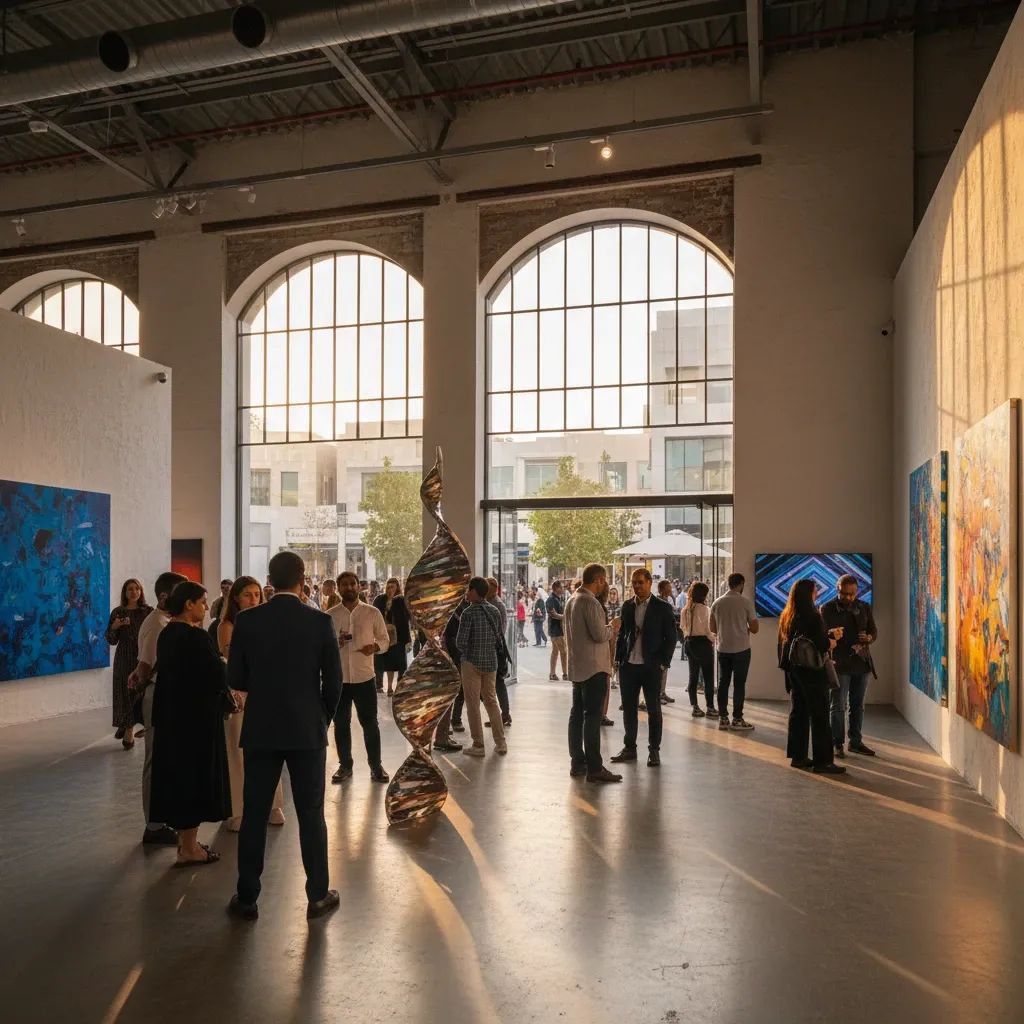
Alserkal Avenue, Dubai's primary contemporary art district in Al Quoz, houses nearly 100 creative businesses across 500,000 square feet of converted industrial warehouses. The Alserkal Arts Foundation oversees programming for what has become the UAE's most significant grassroots cultural destination. Over the past month, the foundation has tested an experiment: rather than compress the city's most significant cultural celebration into a single concentrated week, it stretched programming across five weekends running through May 18. For UAE residents balancing professional and personal commitments, that decision matters—it eliminates the pressure to compress gallery visits into a single weekend.
Why This Matters
• May 14–17: Alserkal Art Month closes with Art Dubai's 20th anniversary, featuring a moving-image program called "Moving" presented across Alserkal Avenue and Madinat Jumeirah—a rare institutional collaboration
• Free access through end of month: All programming remains complimentary with free registration at alserkalartmonth.online; no hidden costs or ticketing barriers exist
• 2 million annual visitors now: The district has evolved from underground creative haven into a genuine tourism and economic anchor, attracting more annual foot traffic than many of Dubai's branded attractions
• Permanent shift ahead? While not officially locked in, institutional investments suggest the foundation is moving toward year-round programming rather than reverting to compressed annual weeks
The Disruption That Forced a Better Strategy
In February and March 2026, the United Arab Emirates contended with regional conflict that rippled through logistics, air traffic, and cultural planning. Iranian military strikes and subsequent disruptions to airspace stretched across the Gulf. The effect on Dubai International Airport was measurable: passenger traffic dropped significantly year-on-year in March. Cargo shipments faced weeks-long delays. International galleries scheduled to ship work for April exhibitions faced impossible choices—delay shipments, pay premium freight costs, or simply pull out.
Art Dubai, the region's flagship art fair, was originally slated for mid-April. Rather than proceed with half its international exhibitors absent and logistical chaos ongoing, organizers made a counterintuitive move. They pushed the fair to May 14–17, giving cargo and travelers time to normalize airspace and flight schedules. But they also asked a harder question: why use the gap between April and May for nothing?
The Alserkal Arts Foundation answered by extending its traditional Art Week into what they called a "month-long celebration." The framing emphasized philosophy—"challenging times require challenging programmes"—but the mechanics were pragmatic. By distributing visitors and programming across five weekends instead of concentrating them into three days, the district reduced financial pressure on individual galleries, lowered bandwidth strain, and absorbed uncertainty better. If attendance lagged during any particular week due to lingering flight delays or residual caution, the program continued. Revenue spread. Risk distributed.
This wasn't revolution; it was sensible risk management applied to cultural production.
What's Still Happening and What Closes Next Week
As of mid-May, Alserkal Avenue remains in full operation. The "Still A Sky We Hold" public artwork by Shilpa Gupta—reworked specifically for this month—remains the conceptual anchor, accessible without registration, functioning as the kind of art that encounters you casually rather than demanding formal gallery entry.
The closing partnership with Art Dubai marks the cultural crescendo. "Moving," a four-day program of moving-image works and screenings, will occupy both Alserkal Avenue venues and Madinat Jumeirah, positioning the fair and the district not as competitors but as collaborative institutions. This cross-venue model is genuinely rare in the region. It signals that Dubai's cultural institutions are maturing beyond territorial silos.
Throughout the district, individual galleries maintain staggered hours through May 18. Cinema Akil, the United Arab Emirates' only independent arthouse cinema, continues screening curatorial selections. The Junction hosts final-week performances and readings. The Blank Space initiative, which provides emerging creatives with free warehouse access and visibility, remains open for studio visits.
New programming cycles weekly, with updated lineups posted every Monday on Alserkal Avenue's official social channels. The district operates as a pedestrian-only zone after 7pm on weekdays and throughout weekends, with three entry points on 17th Street, 6A Street, and First Al Khail Street in Al Quoz 1, the industrial district located between Sheikh Zayed Road and Al Khail Road, approximately 15 minutes from Dubai Marina and Downtown Dubai. Standard hours run 10am to 7pm, though individual spaces vary.
How This Reflects Deeper Shifts in Dubai's Cultural Strategy
The decision to extend Art Month, while presented as a temporary response to disruption, reveals something more durable. The Alserkal Arts Foundation has quietly invested in infrastructure suggesting permanence: research grants, artist residencies, public art commissions, the Blank Space program providing emerging creators with free warehouse access, tools, and network visibility. These aren't designed for episodic deployment. They're foundational to sustaining an ecosystem.
For residents, the implications are tangible. Cultural participation becomes feasible alongside work and caregiving. For the creative economy, sustained programming attracts institutional partners who plan years ahead. International galleries, visiting curators, and cultural organizations need predictability. A district known for concentrated bursts attracts speculators and tourists. A district promising consistency attracts deeper commitments—residencies, long-term partnerships, permanent satellite operations.
The distinction matters economically. Job creation, emerging artist support, stable business operations—these depend on reliable cultural infrastructure, not sporadic activity.
The Economics of Creative Clustering in Al Quoz
Alserkal Avenue now functions as a dense creative cluster, housing nearly 100 businesses and over 90 organizations across 500,000 square feet of transformed industrial space. The economic logic is straightforward. Creative clustering generates job creation, attracts foreign direct investment, and positions culture as a strategic economic asset. Dubai, historically synonymous with real estate and hospitality, has deliberately rebranded itself as a cultural destination. Alserkal Avenue is the evidence. It welcomes approximately 2 million visitors annually—a substantial tourism draw, but more importantly, a source of creative employment and economic activity concentrated in a single geographic district.
For residents particularly—expat professionals in design, media, tech, and education—districts like Alserkal affect quality of life and career viability. They transform Dubai from purely extractive work into cities where cultural careers and creative entrepreneurship become feasible. The "Blank Space" initiative isn't subsidized art appreciation; it's infrastructure enabling economic participation for emerging creatives.
Practical Considerations for Visiting This Week
Alserkal Avenue offers free parking across multiple lots within walking distance of gallery entrances. All gallery spaces are air-conditioned, a practical consideration given Dubai's May heat. Budget 2-4 hours for a comprehensive gallery visit, or plan a full day if attending workshops and Art Dubai programming at Madinat Jumeirah.
Navigating the Closing Week and What Comes After
If you haven't yet attended during Art Month, the final week offers concentrated opportunity. The May 14–17 overlap with Art Dubai creates something genuinely rare: a week where multiple cultural institutions function as coordinated ecosystem rather than separate events. Both Alserkal Avenue and the fair will present moving-image works, curated talks, and collaborative commissions. Experiencing both in sequence creates narrative coherence impossible when experiencing them in isolation.
Individual gallery hours vary by space, so checking beforehand is essential. Most programs prioritize active participation over passive observation—workshops, performances, discussions, and community activities rather than silent gallery-walking. Budget time accordingly. The district is pet-friendly, though policies differ by venue.
While general gallery browsing requires no registration, structured programming—workshops, talks, performances—requires free advance registration at alserkalartmonth.online. The process is frictionless: select your events, complete registration. No payment required. The barrier is simply showing up.
The Broader Context: Cultural Resilience in Uncertain Times
What Dubai's cultural sector demonstrated in 2026 was functional resilience. When conflict disrupted logistics, institutions adapted rather than abandoned. Jameel Arts Centre temporarily closed but maintained digital programming. Sharjah Art Museum and the Sharjah Art Foundation suspended tours but kept websites active. International galleries pulled out of scheduled exhibitions, but local galleries stepped into expanded roles. Art Dubai shifted from all-or-nothing April to flexible May programming with adaptive financial terms—galleries no longer required to pay upfront booth fees, instead sharing a percentage of sales capped at standard costs. Galleries unable to travel could present through local representatives or defer payment to 2027.
These aren't minor logistical adjustments. They reflect an emerging model for cultural institutions in geopolitically unstable regions: building flexibility and decentralization into operational planning. Events that depend on single weekends, concentrated international participation, and rigid timelines become fragile. Events designed for distributed programming, regional participation, and adaptive scheduling become durable.
Alserkal's five-week format isn't permanent unless the foundation formally commits. But the organizational infrastructure—residencies, grants, commissions, year-round public programming—suggests the framework is shifting toward permanence. The month-long experiment, born from disruption, may have inadvertently revealed a better model than the compressed alternative it replaced.


