
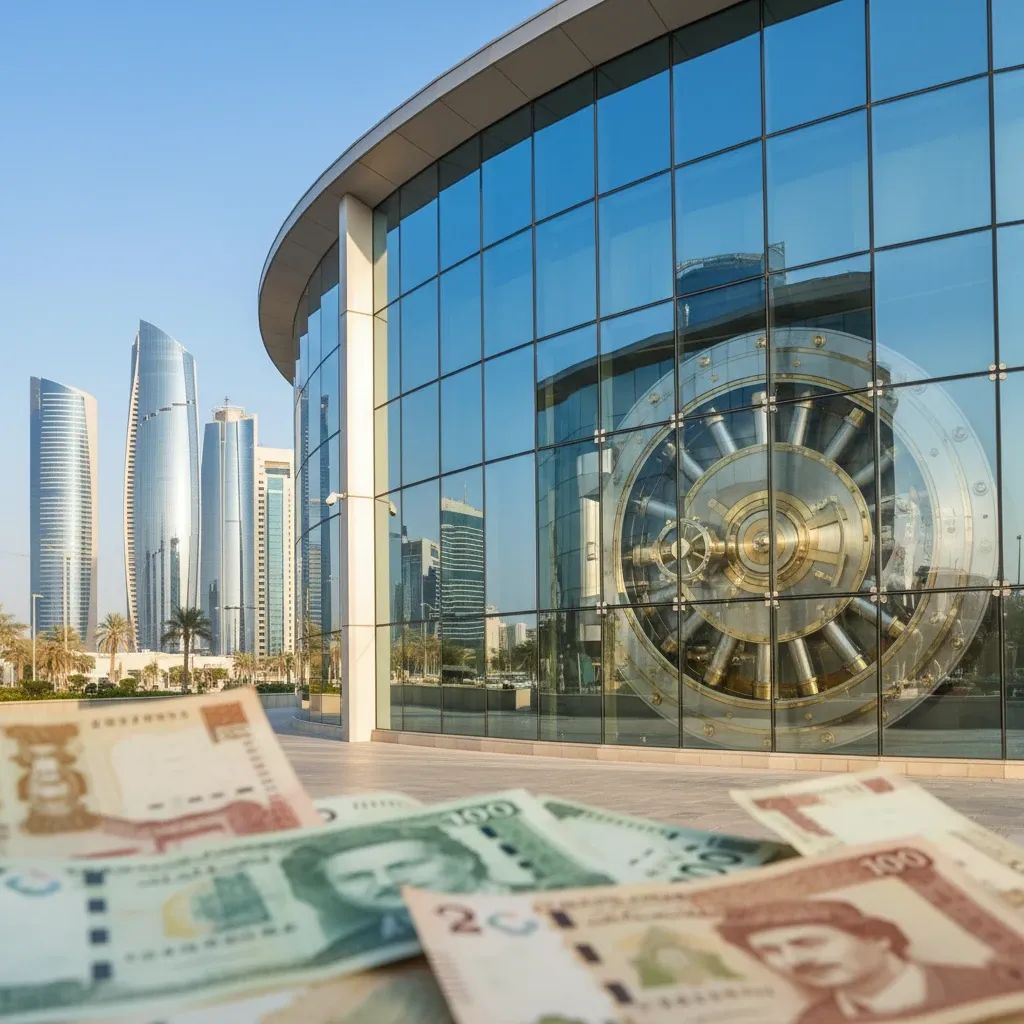
First Abu Dhabi Bank Maintains AA- Credit Rating with Fitch Affirmation
Fitch Ratings has reaffirmed First Abu Dhabi Bank's AA- long-term credit rating with a stable outlook—reinforcing the bank's position as the region's highest-rated lender. The confirmation arrives as the United Arab Emirates banking sector demonstrates resilience against a backdrop of global uncertainties, positioning FAB as a critical institution within the UAE's financial infrastructure.
Why This Matters
• FAB holds equivalent AA- ratings across all three major rating agencies (Fitch, Moody's at Aa3, and S&P)—a distinction virtually no other financial institution achieves in the Middle East.
• The bank's capital buffers stand at a CET1 ratio of 12.8% and liquidity coverage of 145%, meaning operational continuity is assured even under stress scenarios.
• FAB's superior credit rating translates to competitive international funding costs, supporting overall banking services.
• Residents holding savings benefit from the bank's strong financial foundation and institutional stability backed by government positioning.
The Mechanics Behind FAB's Dominance
Understanding why Fitch maintains such confidence in FAB requires grasping three interlocking realities. Scale represents the first pillar: FAB commands between 25% to 30% of all loan originations, deposits, and assets across the entire UAE banking sector. This concentration makes the bank functionally indispensable to national economic activity.
Abu Dhabi's fiscal position forms the second pillar. Unlike many sovereign economies straining under debt burdens, the emirate carries minimal public liabilities while maintaining vast hydrocarbon reserves and a diversified sovereign wealth portfolio. This imbalance—enormous resources relative to debt—gives the government significant capacity to support critical financial institutions.
Regulatory architecture represents the third element. The Central Bank of the UAE has established frameworks supporting banking sector resilience during market dislocations, enabling lenders to maintain credit flows even during periods of market stress.
Fitch's analysts cited this convergence—FAB's flagship market position, sovereign backing from one of the world's richest states, and proactive regulatory support—as the foundation for its exceptional rating. The bank's F1+ short-term rating, the highest category available in global credit markets, signals to institutional counterparties that operational risk with FAB is minimal.
How FAB Compares Across the Region
Placing FAB's standing in regional context reveals its advantage as the highest-rated bank in MENA. The bank operates within the UAE's largest economy by nominal GDP and benefits from Abu Dhabi's position as a major hydrocarbon exporter with substantial sovereign assets. This combination creates structural advantages that competitors face difficulty replicating.
A higher credit rating reduces borrowing costs in international capital markets, an advantage FAB leverages through competitive pricing on financial services. Corporate clients benefit from FAB's capacity to arrange facilities; the bank's rating provides confidence in execution. Trade finance counterparties value processing through FAB because settlement certainty and operational reliability are hallmarks of the institution.
FAB's integration with Abu Dhabi's government, combined with its economic diversification advantages and absence from geopolitical conflict zones, creates a durable competitive position within the region.
Where Vulnerabilities Actually Hide
Stripping away the positive rating narrative exposes legitimate risks that warrant attention. FAB's non-performing loan ratio of 4.5% as of Q1 2026 reflects the bank's engagement across diverse lending segments. Exposure to government-backed infrastructure projects and Abu Dhabi-sponsored corporate borrowers means FAB's fortunes are connected to sovereign decision-making and project execution timelines.
Real estate represents a second consideration. Property sector exposure exists across Gulf financial institutions. The bank's provision coverage ratio of 103.2% for non-performing loans provides a cushion, but property market volatility—particularly outside prime locations—remains a monitoring point. The 2008 property correction in the UAE demonstrated how quickly market conditions can shift.
Geopolitical developments represent a third vector. While Fitch's stable outlook reflects confidence in regional stability, global and regional economic conditions remain subject to change. For FAB specifically, the bank's position in Abu Dhabi—with geographic distance from active conflict zones and economic diversification—limits exposure compared to some regional peers.
What the Rating Means for Residents and Businesses
For residents, the practical implications are clear. Depositors can place funds with confidence in the bank's institutional strength and financial stability. Borrowers benefit from FAB's access to competitive international funding, supporting overall lending services availability. Expat workers remitting salaries internationally face minimal operational risk; FAB's liquidity and capital position guarantee transaction processing reliability.
For small and medium enterprises, the rating confirmation supports reliable access to working capital financing. FAB's leading position in trade finance—essential for an economy built on re-export and import-dependent commerce—derives directly from its credit standing and operational capacity. Suppliers using letters of credit through FAB experience reliable processing. Corporates seeking facility arrangements find competitive pricing when FAB serves as arranger.
The broader economic context amplifies these benefits. The UAE Central Bank projects robust economic growth, with expansion concentrated in non-hydrocarbon sectors: financial services, manufacturing, logistics, and digital commerce. FAB's capacity to fund this expansion—supported by strong capital and liquidity positions—supports national economic activity.
The Path Ahead
Fitch's affirmation signals institutional confidence in FAB's operating environment and risk management. Management has positioned deliberately toward liquidity preservation and capital strength, a conservative calculus that aligns with a banking sector operating within robust regulatory frameworks. This positioning supports stability in FAB's financial operations.
Over the next 18 months, FAB's challenge centers on sustaining its ratings advantage while managing an evolving competitive landscape. The bank's likely strategy involves deepening market penetration in underserved segments: small-business lending, digital finance platforms, and emerging sectors where the bank's balance sheet strength and institutional relationships provide advantages.
For residents, businesses, and investors within the UAE, the underlying reality remains constant: FAB's financial foundation is exceptionally robust, its institutional backing is substantial, and its capacity to support UAE economic activity shows no sign of diminishing through 2026 and beyond.


