
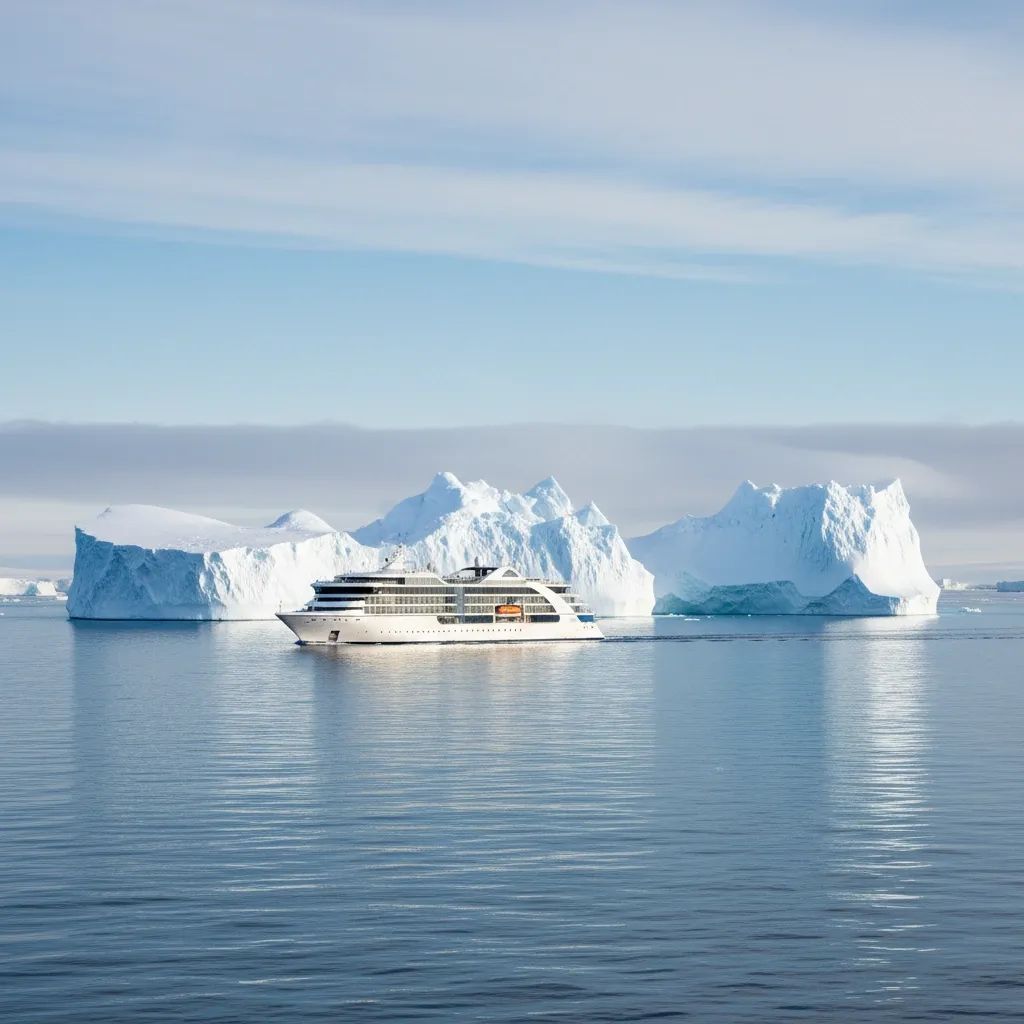
When a Luxury Expedition Turns into a Medical Emergency: Inside the MV Hondius Crisis
A Dutch-flagged expedition vessel carrying 147 passengers and crew from around the globe became the stage for one of the most coordinated international disease-response operations in recent years. By early May 2026, the MV Hondius was no longer a luxury cruise—it was a floating quarantine zone. The culprit: Andes hantavirus, a rare pathogen endemic to South America that, in a cruel twist of biology, spreads between humans in ways most hantaviruses cannot. Three people died. Eight fell ill. And by May 10, roughly 150 individuals faced an evacuation operation that required coordination across multiple governments, aviation authorities, and public health agencies.
Why This Matters
• Andes virus kills approximately 1 in 3 people who develop severe respiratory complications, making even asymptomatic screening essential.
• Person-to-person transmission is extremely rare for hantaviruses, but the enclosed environment of a cruise ship provided ideal conditions for spread.
• Evacuees require 42 to 45 days of quarantine, with different nations choosing hospital-based or home isolation depending on their disease surveillance infrastructure.
• The World Health Organization Director-General personally arrived in Tenerife, signaling unprecedented coordination for what officials stress is not another pandemic-scale threat.
The Voyage That Became a Nightmare
The journey began promisingly on April 1, 2026, when the MV Hondius departed Ushuaia, Argentina—a hub for polar and South American expedition cruises. The itinerary promised luxury: pristine landscapes, bird-watching excursions, and close encounters with nature. Among the 86 passengers were a Dutch couple with a passion for ornithology, who had arranged pre-cruise activities in Argentina and Chile focused on observing Andean wildlife in rodent-inhabited regions. These excursions, though controlled and guided, involved precisely the kind of environments where Andes virus circulates among small mammal populations.
Within days of departure, the first signs emerged. Around April 6, passengers began developing symptoms that resembled seasonal influenza—fever, muscle aches, nausea. The ship's medical team initially treated these as routine travel illness, common on extended voyages. But the pattern accelerated unnaturally. By late April, several patients showed alarming deterioration: respiratory distress, fluid accumulation in the lungs, plummeting oxygen saturation.
Two passengers died aboard—the Dutch couple—followed by a third fatality identified as a German national. Ship medical staff escalated to emergency protocols. Lab samples were rushed to testing facilities, and by May 2, confirmations arrived: Andes hantavirus, a South American pathogen capable of lethal pulmonary syndrome. The outbreak was real, and it was growing. Six cases were confirmed; two remained probable. The World Health Organization was notified the same day.
Unlike most hantaviruses, which require direct contact with rodents to transmit, Andes virus crosses a biological boundary: it spreads person to person through prolonged, close contact. Shared cabins on a multi-week cruise provided exactly those conditions. The ship's dining halls, narrow corridors, and tight quarters became transmission pathways. Health officials reclassified every remaining passenger as a high-risk contact.
The Waiting Game: When Refuge Became Refusal
As the MV Hondius sailed toward the African coast seeking emergency assistance, its captain approached Cape Verde, hoping the island nation could provide medical evacuation and supplies. The request was denied. Cape Verdean authorities, aware of the confirmed outbreak aboard, refused docking. The decision, though diplomatically awkward, reflected epidemiological reality: an international vessel with active hantavirus transmission posed unmanageable risk to island healthcare infrastructure and population.
The ship anchored offshore in limbo. Passengers faced a stark reality: they were stranded aboard a vessel with a disease carrying a fatality rate approaching 38% for symptomatic cases. Staff morale fractured. Anxiety rippled through the confined population. For days, the MV Hondius remained at anchor while governments negotiated evacuation logistics.
International health authorities moved deliberately. The European Union and World Health Organization formally requested that Spain assume responsibility for managing evacuation—a choice based on Spain's advanced healthcare infrastructure and experience with Mediterranean maritime emergencies. Coordination meetings convened across multiple time zones. Aviation officials from countries with evacuees aboard (the United States, United Kingdom, Netherlands, Belgium, Germany, Greece, and others) prepared aircraft. Quarantine facilities across multiple nations were activated and staffed.
By May 8, the decision was final: the vessel would sail to Tenerife, in Spain's Canary Islands, where sophisticated port facilities, airport access, and international medical coordination infrastructure existed.
The Arrival and Evacuation: Military Precision Under Crisis
On Sunday morning, May 10, 2026, the MV Hondius arrived at Port of Granadilla in Tenerife. The harbor was secured by Spanish Civil Guard vessels. WHO Director-General Tedros Adhanom Ghebreyesus was present, along with Spain's interior and health ministers—a visual confirmation that international attention was fixed on this operation.
The disembarkation process began meticulously. Tender boats ferried evacuees from ship to shore in small groups, preventing mass congregation. On the dock, Spanish health authorities conducted rapid screening: vital signs checked, respiratory status assessed, preliminary swabs obtained. The medical interrogation was thorough but efficient—safety required speed.
Sealed buses transported evacuees to Tenerife South Airport, roughly 10 minutes away. The vehicle convoy moved under Spanish government supervision. Evacuees had no contact with the local Tenerife population. The operation was designed with compartmentalization in mind: isolate, screen, transport, repatriate.
Government-chartered aircraft waited at the airport from multiple nations. Spanish nationals boarded first, followed by other nationalities in coordinated waves. The sequencing mattered—health officials wanted to prevent any asymptomatic shedders from transmitting to airport personnel or mixing with passengers from other countries. By late Sunday, more than half the evacuees were airborne.
Where They Went: A Patchwork of National Quarantine Strategies
The repatriation process revealed how differently nations approach high-consequence infectious disease. Evacuation was not one-size-fits-all.
British nationals—22 passengers and crew members—faced hospital-based isolation. They were flown to Merseyside and admitted to Arrowe Park Hospital in Wirral, where they entered strict 45-day quarantine in controlled hospital settings. The United Kingdom Health Security Agency reasoned that hospital confinement allowed continuous monitoring, rapid intervention if symptoms emerged, and eliminated any risk of household transmission.
American evacuees—17 individuals—faced equally rigorous protocols. They were transported via U.S. government medical repatriation aircraft to Offutt Air Force Base in Omaha, Nebraska, then transferred to the National Quarantine Center at the University of Nebraska Medical Center. This facility is purpose-built for maximum-containment infectious disease isolation, designed for pathogens with severe transmission potential or fatality rates exceeding 25%. The 45-day isolation protocol is absolute.
Dutch evacuees, approximately 29 people, received authorization for home quarantine with active supervision. Dutch health authorities deployed regional monitoring teams for daily symptom checks. Serological testing—blood work to detect viral antibodies—was arranged for any individual developing symptoms during isolation.
Belgian nationals received preliminary assessment at University Hospital Antwerp before being released to supervised home isolation.
This disparity in quarantine severity reflects epidemiological judgment: nations with endemic hantavirus experience trusted home-based monitoring; those lacking disease infrastructure opted for hospital control to ensure comprehensive surveillance.
The Biology of the Threat
Hantavirus encompasses dozens of species distributed globally, but only one—Andes virus—reliably transmits between humans. Most hantaviruses require direct contact with infected rodents: inhalation of dust from rodent urine or feces, or handling contaminated material. Andes virus crosses this boundary, spreading person to person through close, prolonged contact in enclosed spaces, exposure to respiratory secretions, or direct physical contact with symptomatic individuals.
The incubation period ranges from 4 to 42 days, meaning new cases could emerge as late as mid-June, nearly a month after evacuation. This long window explains the 45-day quarantine protocols—providing a safety buffer beyond maximum known incubation.
Clinically, the disease begins subtly: fever, muscle aches, general malaise. But progression accelerates. Within days, respiratory symptoms emerge. Acute respiratory distress syndrome follows—lungs filling with fluid, oxygen levels crashing. The case fatality rate for symptomatic patients approaches 38%. Mortality depends on access to critical care: mechanical ventilation, extracorporeal membrane oxygenation (ECMO), and supportive therapy.
The European Centre for Disease Prevention and Control classified all ship passengers as high-risk contacts, not because everyone had symptoms, but because confirmed exposure existed and the virus's unique person-to-person transmission potential in confined quarters warranted precaution.
Relevance to Residents in the United Arab Emirates
For people living in the United Arab Emirates, Andes hantavirus is not an endemic threat—the virus circulates in South America, parts of North America, and certain regions of Eurasia, but not in the Middle East. However, the MV Hondius outbreak carries practical lessons for residents who travel.
Hantavirus exposure risk is real for travelers to endemic regions, particularly those undertaking outdoor excursions in Argentina, Chile, the southwestern United States, or rural areas of northern Europe. Pre-trip bird-watching, hiking, or camping in rodent-inhabited regions carry measurable (though small) exposure risk.
The UAE Ministry of Health and Prevention advises residents traveling to endemic areas to practice basic precautions: avoid sleeping outdoors in areas where rodents frequent, minimize exposure to rodent droppings, and maintain awareness of pre-travel health guidance. Travelers with respiratory symptoms shortly after returning from such regions should inform their physicians of potential hantavirus exposure.
The WHO has explicitly stated that this outbreak does not represent another pandemic-scale threat. The virus does not spread through air travel, crowded airports, or public spaces. International tourism is not under threat. However, the outbreak illuminates how rapidly rare pathogens exploit confined environments—cruise ships, expedition tours, research stations—and how dependent global health systems remain on international coordination for crisis response.
The Ship's Recovery and Lessons Ahead
After evacuation, approximately 30 crew members remained aboard to resupply the vessel and prepare it for transit to the Netherlands. The MV Hondius sailed directly to a Dutch port, where it underwent comprehensive disinfection and environmental sampling. Every surface touched by symptomatic patients was decontaminated; air handling systems were replaced or extensively cleaned. Oceanwide Expeditions, the ship's operator, suspended all future departures pending clearance from Dutch maritime health authorities.
Health departments across North America and Europe continued monitoring evacuees. The U.S. Centers for Disease Control and Prevention and state health agencies tracked passengers who had disembarked at earlier ports in South America before outbreak confirmation—a precautionary measure to catch delayed symptom onset.
As of May 10, no secondary cases were reported in the general population. Health officials described the operation as a textbook example of rapid, coordinated international response. The real test comes in the weeks ahead. If 42 days pass without new cases, the operation will be deemed successful—a demonstration of how modern public health systems, despite their friction and complexity, can execute synchronized crisis response across borders when the threat is clear and coordination is prioritized.


