
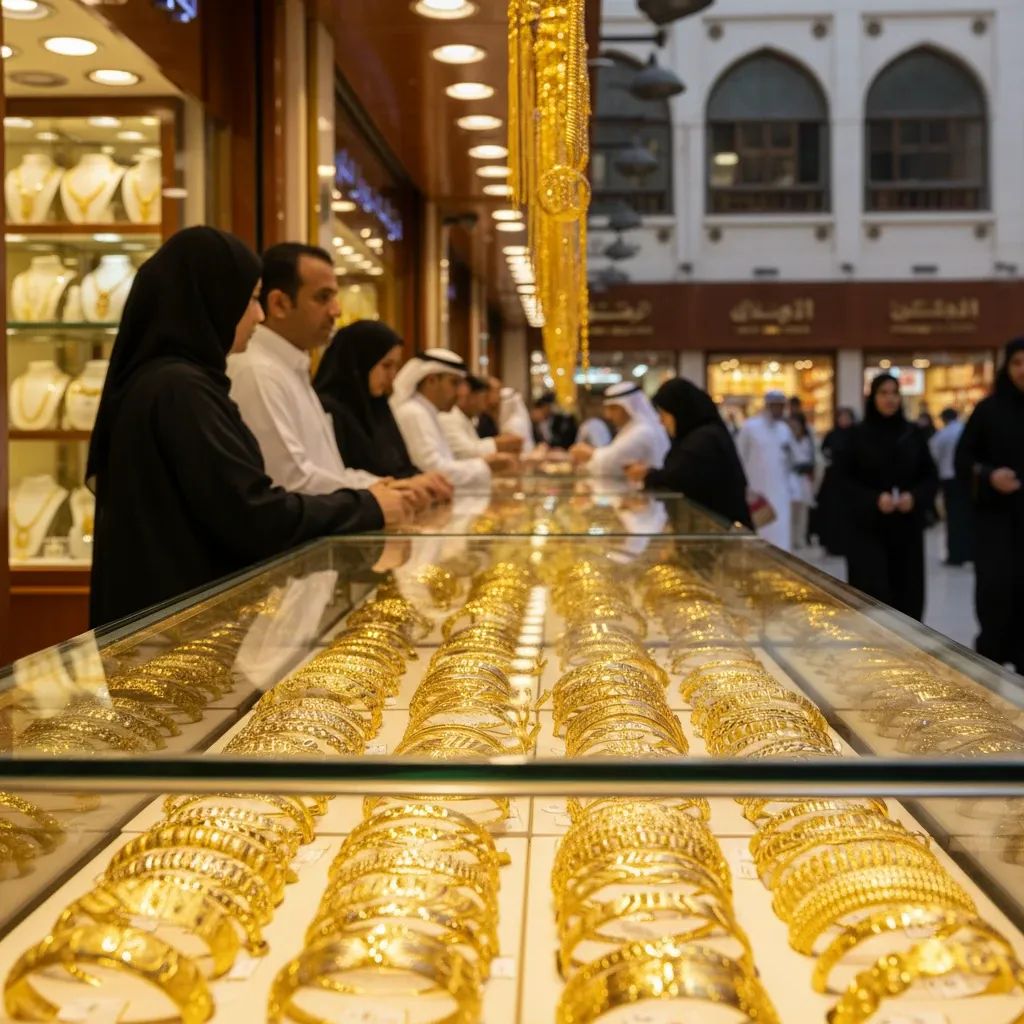
A resurgent US dollar has knocked gold back below the USD 5,000 mark, a move that will slightly ease retail jewellery prices in Dubai and Abu Dhabi but also remind investors that 2026’s precious-metal rally is anything but a straight line.
Why This Matters
• Dh/g Price Trim: Dubai 22-karat is expected to open near AED 188/g, roughly AED 3 cheaper than last Thursday.
• Dirham Peg Advantage: Because the dirham is tied to the dollar, local buyers feel the pullback immediately, unlike shoppers in euro or rupee markets.
• Window for Hedging: Private investors considering diversification before Ramadan may find a short-lived entry point.
Market Snapshot
After touching an intraday high above USD 5,100 earlier this month, spot gold slid 1.5 % to USD 4,918.65/oz at Monday’s close, while COMEX April futures settled at USD 4,955.45. The retreat tracks a 0.60 % jump in the dollar index (DXY) to 97.5, its strongest reading since December. Locally, the Dubai Gold & Commodities Exchange (DGCX) echoed the move, with its flagship kilo contract slipping to AED 181,900.
What Is Driving the Pullback
Stronger greenback: Robust US payrolls and anticipation of Tuesday’s CPI have revived the dollar’s safe-haven bid, making dollar-priced bullion more expensive for holders of other currencies.
Cooling geopolitical risk: Tentative progress in US-Iran and Russia-Ukraine talks has drained some of the hedge demand that propelled gold to records in late January.
Profit-taking: Funds that bought aggressively during January’s 12 % spike are locking in gains, adding near-term selling pressure.
Holiday liquidity gap: The Chinese Lunar New Year break thinned order books, exposing prices to sharper swings.
What This Means for Residents
• Jewellery shoppers: Retailers at the Deira Gold Souk say they will adjust price boards before tonight’s evening rush. A typical 50-gram bangle could cost about AED 150 less than it did over the weekend.
• Expats remitting gifts: With Indian and Pakistani rupees still soft, buying ornaments here and sending them home remains marginally cheaper than purchasing abroad.
• Portfolio builders: UAE-based wealth advisers recommend using staggered purchases—often called a ‘gold SIP’—to average into holdings rather than chasing single-day dips.
• SME hedgers: Jewellery manufacturers in Sharjah’s industrial zone who source raw gold might delay procurement until the dollar rally shows signs of exhaustion.
Central Banks Keep the Floor Intact
Even as prices wobble, official-sector demand is relentless. The People’s Bank of China just logged its 15th consecutive monthly addition, part of an estimated 750-800-tonne buying programme forecast for 2026. Analysts at UBS and JPMorgan argue this structural bid limits downside to around the USD 4,700 level.
Analyst Outlook
• UBS Wealth Management: Sees consolidation near USD 5,000 through March; advises clients to maintain a 5 % allocation.• Goldman Sachs: Flags upside risk to its USD 5,400 December target, citing ‘sticky’ inflation.• Sucden Financial: Expects two-sided volatility but believes central-bank purchases put a floor under major sell-offs.
Practical Tips for UAE Investors
Watch the dirham: Because the currency is pegged, local price moves are tightly correlated to dollar swings—keep an eye on DXY rather than EURUSD.
Use T+2 settlement on DGCX: This lets you roll positions quickly if the Fed commentary surprises.
Blend bars with ETFs: Physical 100-gram bars from accredited Dubai refineries still carry a 0.5 % premium, versus roughly 0.25 % for AED-hedged gold ETFs traded on ADX.
Mind zakat timing: For residents calculating annual zakat on gold holdings, temporary dips can slightly reduce the payable amount if purchases are timed before the lunar calendar cut-off.
Bottom Line
The dollar’s latest burst has provided the first meaningful discount in the gold souks this year, yet the broader narrative—central-bank buying, sticky inflation, and residual geopolitical risk—remains supportive. For UAE households, that means a small but welcome breather on jewellery bills and a tactical entry point for long-term savers rather than a wholesale trend reversal.


