The United Arab Emirates' Dubai Basketball franchise has moved within touching distance of the semi-finals after dismantling Serbian opposition in Sarajevo, establishing a commanding platform in their Adriatic League playoff series that demands just one more victory to advance. This is the kind of playoff statement that transforms how opponents prepare—and how investors assess talent development infrastructure in the region.
Why This Matters
• One game from the semi-finals: Dubai holds a 1-0 series lead with Spartak requiring a dramatic reversal to extend the matchup beyond May 10.
• Elite-level execution: A 28-point victory margin in a playoff quarter-final indicates Dubai is operating at a fundamentally different competitive tier than their Serbian opponent.
• Investment validation: The UAE-based club's seamless integration into Europe's most historically significant basketball competition signals genuine pathways for regional sports franchises into continental markets.
The Performance That Settles Questions
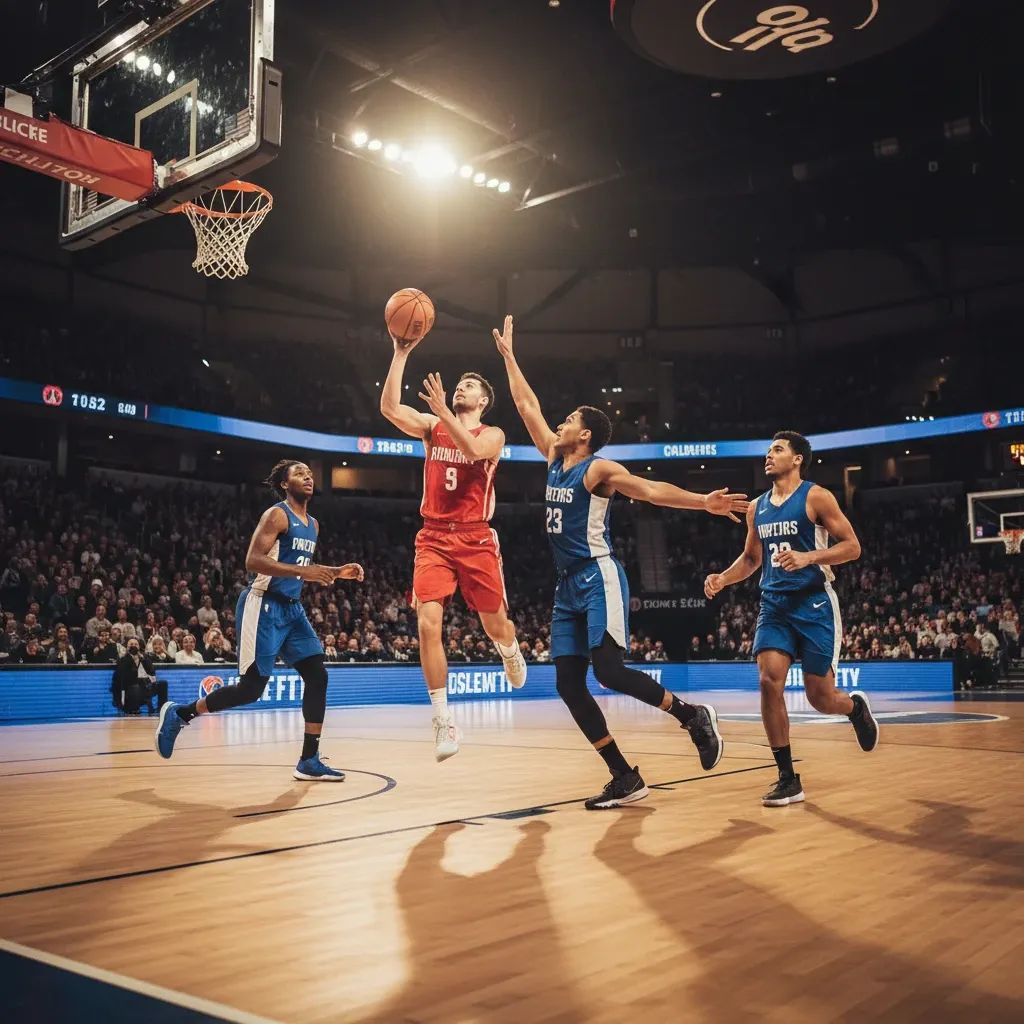
When professional sports franchises compete in established leagues, the outcomes often reveal uncomfortable truths about ambition exceeding execution. Dubai Basketball's 102-74 dismantling of Spartak Office Shoes tells a different story. The United Arab Emirates side didn't simply win—they controlled the tempo, suffocated Spartak's offensive creation, and converted their advantages into a decisive margin that eliminates meaningful suspense from the series dynamics.
The victory unfolded methodically rather than dramatically. Dubai's defensive blueprint effectively neutralized Spartak's perimeter operations, forcing contested looks and manufacturing turnovers in transition. On the opposite end, the ball movement created mismatches that the roster systematically exploited. By the fourth quarter, the contest had transformed into a formality, a circumstance that reveals as much about Dubai's mental toughness as their raw talent.
Musa's Breakout Moment
Dzanan Musa, the forward now representing Dubai Basketball, delivered a season-defining performance that obliterated his typical output. His 31 points represented a significant elevation from his regular-season contributions, yet the dominance extended beyond raw scoring. Musa's efficiency—shooting selection, court spacing, mid-range execution—suggested a player entering peak form precisely when postseason pressure usually exposes weaknesses rather than obscuring them.
This performance carries particular weight given Musa's trajectory. His career progression has demonstrated steady improvement through various competitive levels. The elevation he showed in this playoff performance underscores the kind of peak execution that separates reliable contributors from genuine postseason threats.
Mfiondu Kabengele provided essential complementary work, accumulating 16 points, 12 rebounds, and five assists in a performance that underscores his multidimensional value. Kabengele's interior rebounding proved particularly crucial—Spartak rarely secured second-chance opportunities, a differential that compounds across a seven-game series. His ability to facilitate from the post (five assists indicates meaningful offensive creation) gave Dubai flexibility in attack generation, reducing reliance on perimeter shot-making.
Spartak's Inconsistency Exposed
Spartak Office Shoes, coached by Vlada Jovanovic, entered these playoffs facing a challenging matchup against a top-seeded opponent. The Serbian club has demonstrated inconsistency throughout their campaign, and Dubai's playoff opener exposed those vulnerabilities. Key contributors including Olivier Hanlan and Igor Drobnjak struggled to establish offensive rhythm against Dubai's switching defense scheme, which systematically prevented isolation advantages. Their 74 points represent a material deviation downward from seasonal norms, suggesting they faced a qualitatively different caliber of opposition rather than simply enduring an off evening.
What Playoff Success Means for the Emirate
For United Arab Emirates residents and commercial observers, Dubai Basketball's trajectory carries significance beyond final scores. The franchise entered a historically competitive European league where established institutions command institutional memory spanning decades. Yet Dubai's top-seed designation indicates they have transcended novelty status and become genuine championship contenders.
This development attracts practical interest. Expat communities in the emirate now have access to elite-level basketball without requiring international travel, while the team's continued success generates sponsorship and media opportunities for UAE-based enterprises seeking continental exposure. The franchise validates a strategic hypothesis: that regional wealth can successfully acquire and develop competitive European sports assets, provided the institutional discipline and coaching infrastructure exist to maximize talent.
The path forward requires only one additional victory in the coming matches. However, the decisive nature of Game 1 suggests Spartak faces a mountainous task requiring not merely improved execution but a fundamental shift in how they generate offensive opportunities and defend transition situations.
Forward Projections
Should Dubai advance—a development their current momentum renders highly probable—they enter semi-final competition as a feared opponent rather than an interesting challenger. The combination of Musa's emerging postseason form and Kabengele's defensive rebounding creates a formula that most remaining opponents will find difficult to counter. Home-court advantage throughout the playoffs enhances their position further, providing resource logistics and crowd psychology advantages that compound across a series.
For Dubai Basketball management and ownership, this quarter-final victory validates the strategic investment thesis that positioned them as a top-seeded competitor. For the broader UAE sports ecosystem, it demonstrates that international competitive success remains achievable through smart organizational design and talent acquisition—a lesson that will likely inspire additional regional investment into European professional athletics.